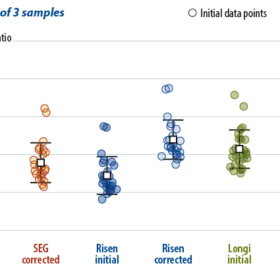
pv magazine test: Annual results
In December 2025, the pv magazine test team conducted a performance analysis of 10 different samples installed at the test field in Yinchuan, China. These 10 modules were installed in December 2024 and January 2025, and had been in continuous operation for nearly a full year. George Touloupas and Huatian Xu of Intertek CEA analyze the results and the role of various degradation modes on long-term PV performance.

Every second counts
Carbon-free claims made by corporate offtakers have come under fire as critics argue accounting based on annual energy consumption is a poor reflection of what’s really happening on energy grids. New emissions standards, growing markets for round-the-clock clean power, and increased energy storage deployment are all set to bring 24/7 carbon-free energy closer to reality.
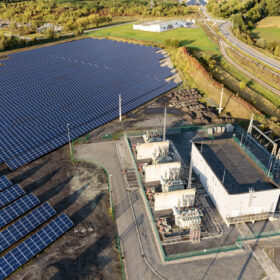
Powering Europe’s AI buildout
Europe is experiencing a renewed surge in data center growth, fueled by colocation and hyperscaler data center companies. The long wait for grid connections poses challenges, but the demand flexibility and heat reuse potential that data centers offer could turn them into an energy system asset, as Blathnaid O’Dea reports.

High-stakes PPAs
Power purchase agreements (PPAs) are evolving into complex risk-sharing structures as hyperscale data center operators trade fixed pricing for physical delivery and grid-bypass certainty. The US solar industry is entering 2026 as the foundational technology for a new era of power demand, even as the sector navigates a volatile federal policy landscape.

New rules for Polish solar
Regulation changes in Poland could help address challenges in one of Europe’s top solar markets, while directives from Brussels may give new impetus to the residential segment. Legal expert Piotr Mrowiec reports on what proposed legislation could mean for solar if Poland’s parliament and president sign off on the plan.
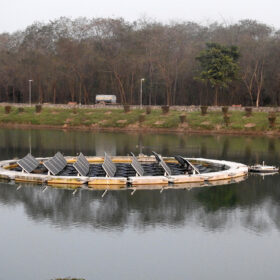
Indian solar’s digital leap
The next phase of India’s clean energy buildout will be defined not only by installed capacity but by how well renewables are integrated to provide flexibility. Digital coordination, market access, and transactional integrity will matter as much as gigawatts deployed. Digitalizing energy is fundamental for promoting solar adoption, ensuring that surplus solar generation is utilized, and enabling distributed assets to play an active role in grid operations, say Shantanu Roy and Saptak Ghosh of India’s Center for Study of Science, Technology and Policy (CSTEP).
