
BESS: A hotbed of innovation
Jurors had a tough task selecting a battery energy storage system (BESS) award winner in 2025, with more than 60 entrants vying for the prize. Some entrants debuted entirely new approaches to energy storage, while others demonstrated continuous performance optimization, including round-trip efficiency gains, capacity utilization and degradation. This year’s winner takes an innovative approach to the C&I segment, with a modular system that breathes new life into second-hand batteries.

Inverters: Fully SiC design takes the win
The jury of the pv magazine Awards 2025 once again faced a challenging comparison. Submissions spanned the full inverter spectrum, from microinverters for balcony systems to multi-megawatt central units for grid-scale storage. The diversity of technologies underlines how dynamic the inverter segment remains and how difficult it is to evaluate across this spectrum. Facing the challenge, the jury awarded first place to a product dedicated to the fast-growing grid-scale battery storage market – an offering that also aims to open opportunities in new market fields. Second place similarly went to a grid-scale design that reduces servicing costs in this segment.

BoS: Boosting bottom lines
Balance-of-system (BoS) products can have a major impact on solar plant safety and performance. The right equipment and components can increase reliability and reduce operations and maintenance (O&M) costs, and as this year’s winner shows, BoS innovation can have a major impact on project economics.

Sustainability: Sharing the knowledge
This year, our jury panel chose two education-focused entries as their winner and highly commended picks, acknowledging the impact of getting the right information to the right people at the right time. Sustainability can be taken for granted as an in-built value of the energy transition, but in reality it continues to need champions willing to make practical and quality information accessible where it is most needed.

Manufacturing: Sustainable innovation
Despite difficult market conditions for many in the sector, solar manufacturers and technology suppliers have continued to innovate in 2025. This year’s winner reflects the emergence of PV recycling as a manufacturing and technology sector in its own right, while the highly commended entry provides a great example of equipment suppliers’ ability to quickly adapt to changes in cell technology and the new requirements they bring.

Publisher’s Pick: Energy storage innovation
Huawei Technologies’ FusionSolar C&I Hybrid Cooling ESS LUNA2000-215-2S10 brings patented innovation to a market segment that is increasingly important to solar and the broader energy transition.

The road to higher kesterite efficiencies
Researchers pushed kesterite thin-film solar cells to a record-certified efficiency of 14.2% in 2024, and have now reached a new module record of 13%. But achieving 20% or higher, which could drive broader commercial interest, remains a distant goal, reports pv magazine’s Lior Kahana.
pv magazine test: October 2025 results
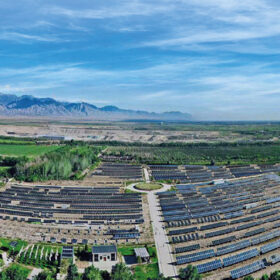
George Touloupas, vice president of ESG and new services at Intertek CEA, and Huatian Xu, the company’s director of technology and quality, present the October 2025 results from the pv magazine test outdoor installations in Yinchuan, China, and Dammam, Saudi Arabia.

Maximizing MACSE
Italian renewable energy experts welcomed the results of Italy’s first electricity storage capacity procurement mechanism (MACSE) auction, held on Sept. 30, 2025. The exercise offered benefits such as lower system costs, but drawbacks remain, including the erosion of operators’ margins. A total capacity of 9,968 MWh has already been allocated, but the cleared prices at auction are just part of the future revenue stack for Italian battery energy storage systems (BESS), as Sergio Matalucci reports.
The business case for C&I storage
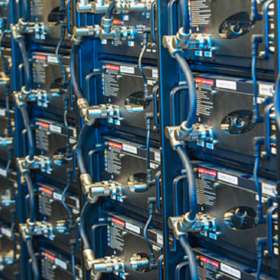
In 2024, European businesses installed roughly 20 GW of commercial and industrial (C&I) solar, but only around 1 GW/2 GWh of C&I battery storage. The gap is striking. Both technologies promise lower energy bills, improved resilience, and decarbonization, but batteries are yet to achieve the same commercial traction that solar enjoys. LCP Delta’s Dina Darshini asks why the gap persists.
