
Solar key to space-based AI
Elon Musk, the CEO of both Tesla and SpaceX, raised some eyebrows at this year’s World Economic Forum (WEF) in Davos, Switzerland, when he predicted “that the lowest cost place to put AI will be space and that will be true within two to three years, three at the latest.” pv magazine reported on Musk’s vision on our global website www.pv-magazine.com on Jan. 26, 2026, and exactly one week later SpaceX announced that it was acquiring xAI “to form the most ambitious, vertically integrated innovation engine on (and off) Earth, with AI, rockets, space-based internet, direct-to-mobile device communications, and the world’s foremost real-time information and free speech platform.”
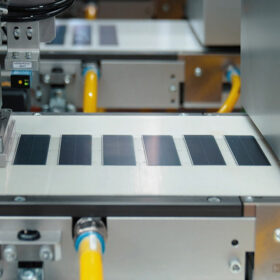
Price forecast: cloudy
Metal price volatility may pressure PV module manufacturers to raise prices, but the outlook for polysilicon and wafer manufacturers is complex. Action on polysilicon supply and muted downstream demand have the potential to influence profitability across the solar value chain. Hanwei Wu of OPIS explains what the latest price data might mean for the industry.

What’s in an encapsulant?
A review of PV module encapsulant materials by scientists at Austria’s Polymer Competence Center Leoben (PCCL) found that many products on the market are labeled simply as “polyolefin,” with little analysis of their actual composition. As polyolefin’s market share grows, this lack of transparency could make quality issues harder to spot. pv magazine spoke with PCCL scientist Gernot Oreski about the need for transparency in encapsulant contents.
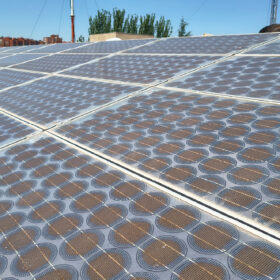
Solar’s living legacy
In early 2021, researchers at a university in Madrid recovered several bifacial PV modules manufactured by Spanish company Isofotón in 1987 that had been operating in different facilities. Following cleaning and characterization, 56 of the modules were installed on a fixed structure at the university, where they have been feeding energy into the grid since May 2021. pv magazine España’s Pilar Sanchez Molina visited the repurposed modules to tell their story.
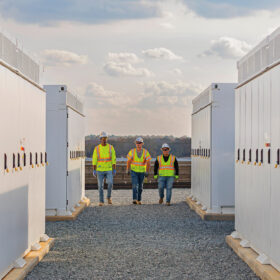
Need for speed
Battery energy storage systems (BESS) are already regularly deployed in uninterruptible power supply (UPS) applications for data centers, but current market conditions are now driving new deployment needs and strategies. Blathnaid O’Dea hears from industry insiders about increasingly popular approaches like bring your own capacity (BYOC) and flexible grid connections (FGC), and why batteries can provide services beyond speed to power that gas turbines can’t.
pv magazine test: January 2026 results
George Touloupas, vice president of ESG and new services at Clean Energy Associates, and Huatian Xu, the company’s director of technology and quality, analyze the January 2026 results from the pv magazine test outdoor installations in Yinchuan, China, and Dammam, Saudi Arabia.
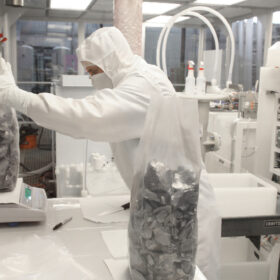
The factors shaping Chinese module prices
Silver price volatility, the return of export value-added tax (VAT) and an abandoned plan to reduce polysilicon manufacturing capacity could all influence PV module prices in 2026. Vincent Shaw reports from Shanghai on the evolving market conditions facing solar module makers in China.
pv magazine test: Annual results
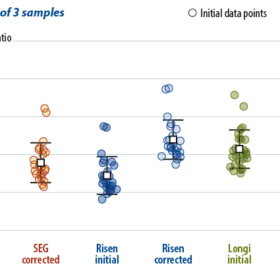
In December 2025, the pv magazine test team conducted a performance analysis of 10 different samples installed at the test field in Yinchuan, China. These 10 modules were installed in December 2024 and January 2025, and had been in continuous operation for nearly a full year. George Touloupas and Huatian Xu of Intertek CEA analyze the results and the role of various degradation modes on long-term PV performance.
Spending big on Mexican solar
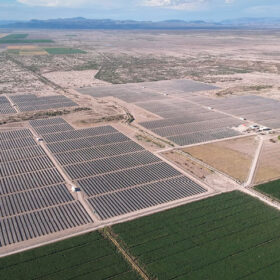
Major new infrastructure investment from the Mexican government includes a tranche of funding to accelerate renewable energy deployment and shore up grid infrastructure. Jorge Zarco reports on the policy developments that could shape solar and energy storage deployment trends in Mexico for years to come.
Indian solar’s digital leap
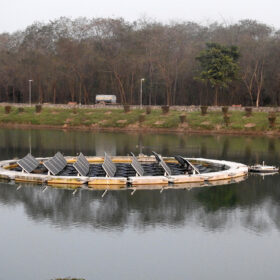
The next phase of India’s clean energy buildout will be defined not only by installed capacity but by how well renewables are integrated to provide flexibility. Digital coordination, market access, and transactional integrity will matter as much as gigawatts deployed. Digitalizing energy is fundamental for promoting solar adoption, ensuring that surplus solar generation is utilized, and enabling distributed assets to play an active role in grid operations, say Shantanu Roy and Saptak Ghosh of India’s Center for Study of Science, Technology and Policy (CSTEP).
