
Chinese PV Industry Brief: Sungrow storage overtakes inverters in 2025
Sungrow says energy storage systems overtook PV inverters as its largest business segment in 2025, as the company posted double-digit revenue and profit growth.
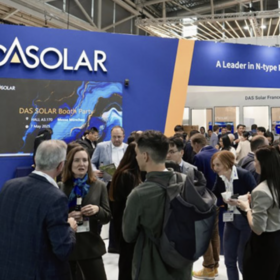
TCL Zhonghuan to acquire control of DAS Solar in consolidation move
TCL Zhonghuan has agreed to take majority control of Chinese solar manufacturer DAS Solar, a producer of advanced n-type modules based on tunnel oxide passivated contact (TOPCon) and back-contact (BC) technologies.

Malaysia’s solar capacity surpasses 5.7 GW
Reports from the International Energy Agency’s Photovoltaic Power Systems Programme (IEA-PVPS) indicate Malaysia added over 1.4 GW of solar in 2025, with more than 5.7 GW now deployed across multiple government schemes.

Hydro-Québec launches grant for residential, commercial solar
Hydro-Québec has introduced a grant offering up to CAD 1,000 ($718.40) per kilowatt installed, covering up to 40% of eligible costs to accelerate rooftop solar adoption and reduce payback periods for residential and business customers in the Canadian province of Québec.
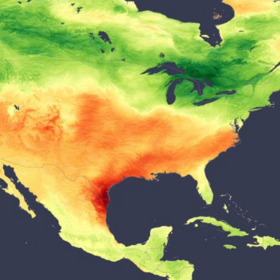
Heat dome and high pressure boost southern US solar as polar vortex clouds the north
In a new weekly update for pv magazine, Solcast, a DNV company, reports that last month North America saw a stark solar divide, with southern regions like northeastern Mexico, southeastern Texas, and much of California experiencing 20–25% above-average irradiance, while Canada, the Great Lakes, and the northeastern U.S. faced persistent cloudiness and below-normal solar conditions. This contrast was driven by high-pressure systems and a southwestern heat dome in the south versus a polar vortex bringing cold air and storms to the north.
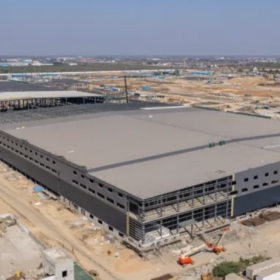
Agratas advances 20 GWh battery plant in western India
Agratas, the global battery business of the Tata Group, has completed the steel frame of its Sanand facility in India, with production expected to begin in 2027.
Zambia tenders 300 MW of solar
The first bid window of Zambia’s new Carbon Feed In Premium Program plans to develop 300 MW of solar across projects that are connected to on-site battery energy storage systems. The deadline to submit expressions of interest is May 31.
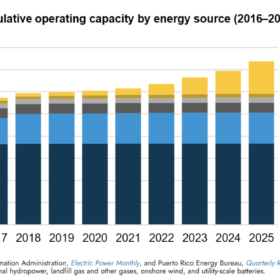
Rooftop solar now accounts for one-fifth of Puerto Rico’s generation capacity
Distributed solar additions have vastly outpaced all other forms of generation as Puerto Rico’s overall power generation capacity continues to grow.
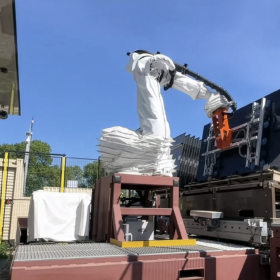
Terabase Energy advances automated PV construction with robotics, AI tools
California-based Terabase Energy is scaling up its automated solar construction platform and expanding its engineering software ecosystem to improve project delivery and performance modeling.

‘Motherhood further shaped my leadership perspective’
This week Women in Solar+ Europe gives voice to Margarita Licht, Product Manager BESS & Charging at Germany’s Goldbeck Solar. She says diverse perspectives and cognitive styles are essential in the solar and energy storage sector, enabling smarter solutions, effective problem-solving, and long-term planning. She also emphasizes that creating inclusive environments, fostering allyship, and choosing workplaces that value authentic strengths empower growth and drive meaningful impact.
