Taiwan’s URE increases module capacity by 500 MW
The manufacturer accounted for around 40% of total solar module demand in Taiwan in 2020. It expects to see its domestic market share increase to 50% this year.
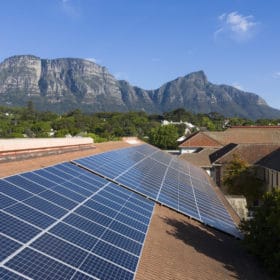
Storage and PAYG critical to deployment of African off-grid renewables
The former need not necessarily relate to conventional lithium-ion batteries, however, as a recent webinar staged by Solarpower Europe and EU body GET.invest discovered.
Improving algorithms to help solar project developers avoid the NIMBY effect
A research group in the United States is proposing to add social variables in GIS-MCDA algorithms for PV project planning as a solution to avoid opposition to large scale solar from local communities. Although some efforts have already been made in this direction, there is still much to be done to understand the degree to which measuring these variables proactively could help mitigate public opposition down the line, on individual projects.
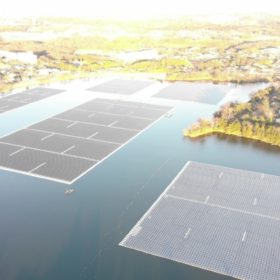
Japan’s largest floating PV plant being reconstructed after Typhoon impact
French floating PV specialist Ciel&Terre said the plant is being split into smaller islands, with a square shape, to avoid stress concentration.

Australia’s first hydrogen fuel cell factory
Sydney-based domestic hydrogen electrolyzer and storage system manufacturer Lavo has revealed it has signed a memorandum of understanding (MoU) to establish Australia’s first hydrogen fuel cell production line in Springfield City, Queensland.

The US added 16.5 GW of PV in 2020
Solar and wind power installations hit all-time highs and became a larger part of the country’s energy mix in 2020, according to a new report from BloombergNEF.
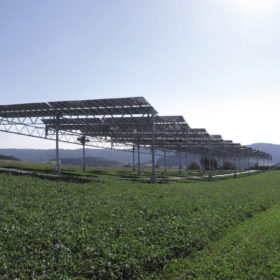
The weekend read: Solar’s flexibility can be agriculture’s gain
Both solar and the farming industry are beginning to see potential in the combined use of land for food production and energy generation. And as innovators begin to experiment with different forms, it’s becoming clear that in most cases it is solar that will have to bend to the needs of agriculture, and not the other way around, to ensure a positive outcome.

Northvolt plans to expand gigafactory in Poland
The Northvolt manufacturing facility in Gdansk should become Europe’s largest factory for energy storage solutions. The production is scheduled to begin in 2022 with an annual capacity of 5 GWh. The company wants to expand it to 12 GWh.
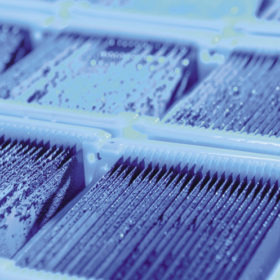
Chinese PV Industry Brief: New glass capacity and a 20 GW wafer order
Flat Glass has activated two new glass furnaces that will bring its total production capacity to 8,600 MT per day. JinkoSolar has secured 20 GW of orders for its 182mm-wafer-based modules.

The best materials for carrier multiplication in solar cells
Researchers in the Netherlands have sought to identify all those semiconductor materials that may make the application of carrier multiplication in photovoltaics much more than a mere suggestion. According to them, the bandgap of the materials should be between 0.6–1.0 electronvolt (eV), which would result in maximum theoretical efficiency of around 44%. 2D and bulk materials were indicated as the most promising with near-ideal carrier multiplication.
