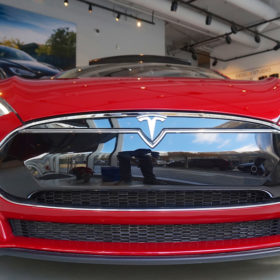
Battery electric vehicle sales in UK were outpacing hybrids – before Covid-19 struck
Pure EVs had begun to claim a rising market share before coronavirus containment measures decimated sales last month. Even in the face of an 88% monthly fall in EV sales from March to April, however, clean energy models fared better than petrol and diesel sales.

New PV system for facades, windows in Japan
Japan’s Kaneka and Taisei have designed their T-Green Multi Solar system to be integrated into walls and window surfaces. The system is available in two different versions – a solid type in which PV laminates are turned into vertical exterior panels or walls, and a variant that achieves transparency through striped solar cells that are integrated into window glass.
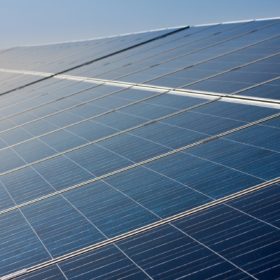
South African chemicals producer seeks to procure 600 MW of renewables
Sasol has launched a request for information process to supply its South African operations with renewable energy.

Nigeria kicks off tender for 10 MW solar park
The Nigeria Sovereign Investment Authority (NSIA) is seeking proposals for a 10 MW grid-connected solar plant in Kumbotso, Nigeria.
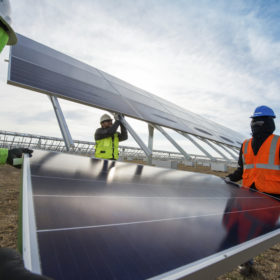
SunPower sells off its O&M business, gets regulatory approval for Maxeon spinoff
SunPower has had to make fundamental changes to continue to be relevant in a solar industry very different from that of its roots. The company aims to become an energy service provider and is leaving low-cost manufacturing to its Chinese partner.
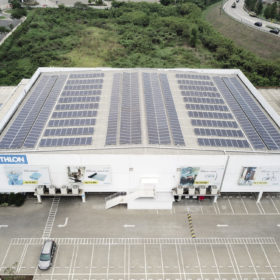
The weekend read: Regulatory changes pave the C&I way
A growing number of companies in Indonesia, particularly multinationals that implement green policies or are listed as RE100 participants, are poised to adopt rooftop PV. Regulatory changes and signals from the country’s previous government, which supported coal, are paving the way for significant growth.

Hungary to hold another renewables auction this year
In its next procurement exercise, the Hungarian government will allocate 77% of the available renewable subsidies that it failed to assign in March’s auction.
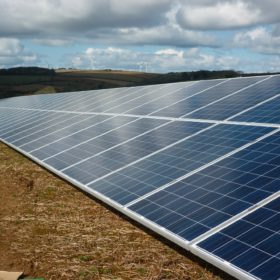
Unsubsidized 350 MW PV project in the UK
Hive Energy has been planning the Cleve Hill Solar Park since 2017. It now expects to secure final approval from the U.K. Department for Business, Energy and Industrial Strategy by the end of this month.

Chinese PV Industry Brief: 3.95 GW of new PV in Q1, new 500 W-plus modules, and a panel with 23.2% efficiency
China’s cumulative installed PV capacity topped 208 GW at the end of March, thanks to 3.95 GW of new projects completed in the first quarter. JinkoSolar and Longi both joined the 500 W-plus module race, with their new panels offering 580 W and 530 W of output, respectively. Ginlong, meanwhile, has revealed plans to raise funds to increase its annual inverter production capacity to 20 GW, and Xi’An Solar has claimed a 23.2% efficiency rate for its N-type TOPCon modules in mass production.
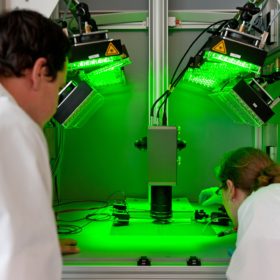
Paving the way for lead-free perovskites
Scientists in Germany and China have developed an additive which greatly improved the performance of a tin-based perovskite solar cell. Cells fabricated with the additive reached 9.1% efficiency, and the researchers say their work opens up many new possibilities to improve the performance of lead-free perovskites.
