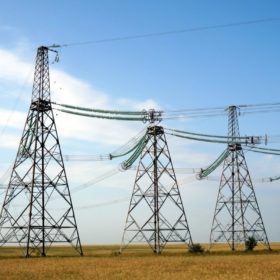
Entso-E targeted in recent cyberattack
The European Network of Transmission System Operators for Electricity said on Monday that unidentified hackers recently targeted its computer networks.

Restrictions on sourcing of cobalt are changing
The Democratic Republic of Congo (DRC) is one of the world’s most natural mineral rich countries, yet it is plagued with poverty, inequality, corruption, human rights violations and many more challenges. Mining for materials like cobalt is at the center of these. According to state-owned miner Gecamines, over 22% of the country’s GDP is generated in the mining sector, while 70% of the world’s cobalt is produced in the country.

Hanergy’s Solibro Hi-Tech unit in liquidation
With the opening of insolvency proceedings, the business operations of the company were halted days ago. No potential investor could be found to take over the business.
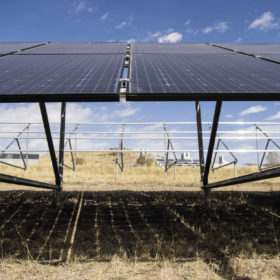
Building on bifacial momentum
Getting the most out of a bifacial module requires a rethink at almost every level of system design and the industry is hungry for field data generated by such systems to better inform energy yield modeling and define the best approaches to maximizing yield at minimal cost. In May, the U.S. National Renewable Energy Laboratory began a three-year study into bifacial performance which is beginning to yield results.
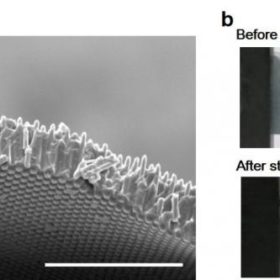
A stretchable, transparent solar cell with 8% efficiency
Korean scientists have unveiled a colorless device made of silicon microwire composites. The enhanced light absorption of the cell, the researchers claim, is due to the re-absorption of light by the microwires, which also benefit from an enhanced electric field.
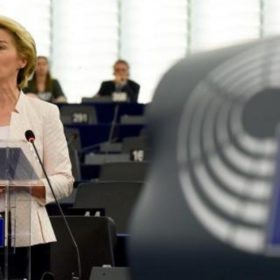
EU climate law sets the stage for a green transformation
Although decried for lacking ambition and as an abdication of responsibility in some quarters, the climate law proposed by the European Commission may be more ambitious than it first appears, as Felicia Jackson, from the center for sustainable finance of the School of Oriental and African Studies at the University of London – considers here.
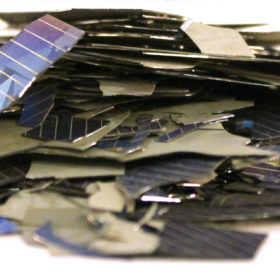
Lessons to be learnt from Italy’s alleged PV fraud
The alleged resale in developing countries of solar modules sent for end-of-life recycling in Sicily could have an important lesson for the PV industry: select reliable recycling entities to avoid potential trouble further down the line. The PV industry should also avoid another potential risk, that of the illegal disposal of PV waste outside the EU.
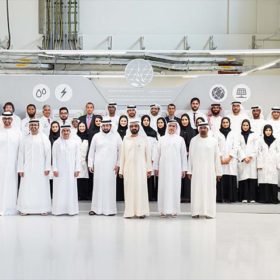
DEWA opens new solar R&D center
The Dubai Electricity and Water Authority’s new research facility at the Mohammed bin Rashid Al Maktoum Solar Park will primarily focus on solar power, energy efficiency, and the integration of smart grids.
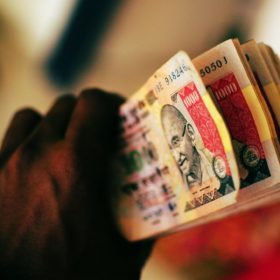
India mulls alternatives to bank guarantees for PV projects
Lobby group the National Solar Energy Federation of India has welcomed the move and asked the Ministry of New and Renewable Energy to extend any such measures to existing contracts to help developers meet working capital requirements.

Desalinating water with mobile solar-powered devices
A U.K. research team has developed a desalination mechanism that could offer a new way to provide drinking water and irrigate remote areas affected by natural disasters. Although the portable device is still in an initial, experimental phase, it can be powered by solar energy, as it has no moving parts and only requires small amounts of electricity.
