
Panasonic claims 16.09% efficiency for lightweight perovskite solar module
The device has an area of 802cm² and thickness of 2mm. The manufacturer claims it improved module performance through an inkjet coating method and a reduction in weight by using thin glass substrates.

Statkraft greens Polish steel with 10-year PPA
The Norwegian hydropower producer has tapped its extensive Polish power purchase agreement portfolio to offer a bankable supply agreement for one of the biggest power consumers in the country.

Mysterious new chlorophyll with potential PV applications
Japanese researchers are studying the ‘Chl f’ substance which features a pigment in photosynthesis which can absorb far-red light from the lower end of the spectrum.

Breaking news: Zhonghuan Semiconductor up for sale
The body responsible for state-owned assets in the Chinese port city of Tianjin has approved plans to sell all or part of the solar manufacturer to outside investors – although the rumored beneficiary is thought to be partially state-owned itself.

Singyes owner Shuifa to funnel $62m into the business
The construction group, which indirectly owns 67% of the solar developer will pay the funds to complete the $98m sale of two 50 MW solar farms in China to a third-party soon to also be controlled by Shuifa.
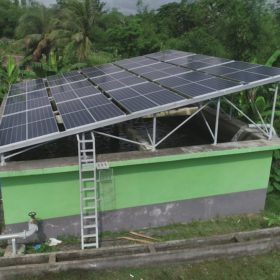
Crop yield rises with solar-powered irrigation
PV systems have helped farmers in the Philippines become less dependent on rain. Projects in Camarines Sur have shown pumping water with solar is not only cheap but can also raise rice yield.

Central Bank of Brazil launches two more solar tenders
Brazil’s biggest lender wants to secure solar power through a leasing arrangement. The central bank expects to buy around 8 GWh of electricity per year for its agencies in the state of Bahia and another 2 GWh in Ceará.

Transitioning to larger wafers
Since 2017, 156.75 mm M2 wafers have been the standard. However, improvements in cell efficiency appear to have hit a bottleneck, making wafer size a hot topic among manufacturers once again. In the second half of 2018, 158.75 mm G1 mono wafers were introduced to the market. Corrine Lin of PVInfoLink argues that while G1 will likely become the mainstream format over the next two years, 166 mm M6 wafers and 210 mm M12 wafers are presenting new options for manufacturers.

Czechia wants another 1.9 GW of solar by 2030
The raised renewable energy ambition has been dismissed by the domestic solar association, which accuses president Miloš Zeman of wanting to destroy the Czech PV sector. In 2019, the country added only 7 MW of new PV installations.

When losing a few PV panels can cost millions of dollars
European satellite operator Eutelsat has revealed one of the two solar arrays on its recently launched 5 West B satellite has been lost. Only 45% of the craft’s generation capacity can be operated, hitting the company’s bottom line to the tune of $5-10 million.
