
Canadian 400 MWac merchant solar plant secures financing
The project will operate at a profit in part thanks to an emissions scheme introduced by the province of Alberta on January 1. The plant will be able to sell its carbon certificates.
Coronavirus could cause solar panel price spike
The coronavirus outbreak in China could raise solar module prices in the near term as manufacturers have already begun experiencing wafer and solar glass shortages. Production rates are also being affected by an extended new year holiday introduced by the authorities as a measure to deal with the virus, and the requirement workers from infected areas quarantine themselves for two weeks.
Predicting solar power generation with ‘deep photovoltaic nowcasting’
The ‘deep photovoltaic nowcasting’ project developed by Chile’s Institute of Engineering Sciences of the University of O’Higgins, Canada’s Laval University and Japan’s Kyoto University, seeks to make short-term, high-resolution projections of solar energy generation.
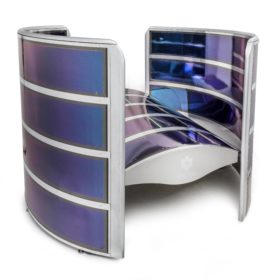
UK designers launch freestanding curved panel
Product development company the Cambridge Design Partnership, working with compatriot solar business Solivus, has developed a curved solar module featuring an organic thin film. The design is based on Solivus’ desire to “create a product so attractive that people would be happy to have one in their garden”.

Bangladesh prepares to tender solar rooftops on public buildings
The government will reportedly be ready to tender contracts to install rooftop PV on its buildings across eight divisions of the nation in as little as three months’ time.
Varying capital costs favor wind over solar in Europe
Differing finance costs across the continent are likely to see wind-rich, high electricity demand nations such as Germany, France, Austria and Belgium forge ahead with renewables at the expense of countries with plenty of sun but where borrowing is expensive, according to a German study.
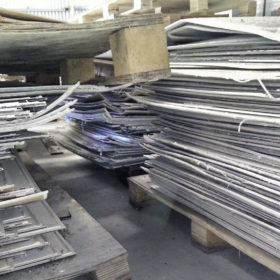
More than 5,000 tons of modules collected for recycling in France
PV Cycle has said it collected more than 280,000 solar panels at the end of their lifecycle in France last year, including 200 tons from the nation’s overseas territories.
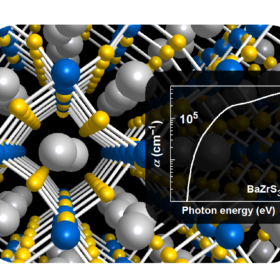
New perovskite promises 38.7% efficient tandem cells
Japanese researchers have identified a perovskite material with a strong band edge gap and high stability which they say could offer 38.7% efficiency if used in the correct tandem cell architecture.

Is Russia’s tax policy hindering the solarization of its multinational Stablecoin Initiative?
Russia is taking the lead in issuing a multinational stablecoin backed by commodities – a cyber-initiative connecting some of the most promising hub of hydrocarbon rich economies stretching across Eurasia, Africa and South America. However if such technology is fueled by hydrocarbon energy, temperatures are expected to rise 3.2 degrees Celsius above preindustrial levels by the end of the century. A decisive role could be played by the BRICS in finding innovative solutions to the functioning of the current global framework, particularly in transitioning to green economies.
Panasonic and Toyota launch EV battery business as solar lifts Kyocera and LG
Electronics corporations Panasonic, Kyocera and LG have filed results for the nine months to December 31. All three reported uplifts because of their solar activity and LG has said it will dive deeper into energy storage. Panasonic is deepening its commitment to automotive batteries through a new joint venture with Toyota.
