
Solar growing faster than expected in Sweden
The Swedish Energy Agency this week said solar power supplies will increase from 400 GWh in 2018 to 1.7 TWh in 2022. Total energy supply in the country is expected to decline from 551 TWh to 526 TWh in the 2019-22 period, due to the shutdown of several nuclear power plants.

New fractal solar panels combine efficiency and aesthetics
Researchers from the United States have proposed a new electrode design for fractal solar panels that combines the typical aesthetic advantages of the technology with the efficiency of busbar design. The proposed pattern is based on the fractal tree structure known as H tree, or T-branching, which is a geometric shape consisting of a repeating pattern that resembles the letter H. The hybrid H-tree/busbar pattern showed power losses that are close to those of standard busbars.
Sector coupling in Europe could see solar and wind demand double
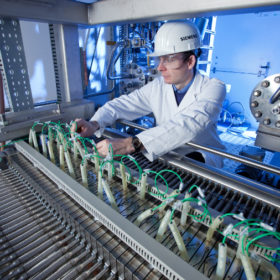
Market intelligence firm BloombergNEF has published a report with power company Statkraft and clean energy distributor Eaton highlighting the importance of sector coupling for Europe’s decarbonization plans. Analysts examined the power markets of Germany and the U.K. and concluded effective sector coupling including the use of green hydrogen could lead to greenhouse gas emission reductions of 83% by 2050.

Shunfeng halts trading ahead of 540 MW project capacity sale
The planned disposal of more than a third of the Chinese solar company’s project portfolio would take a significant chunk out of its debt mountain but trading in company stock was halted this morning, pending an announcement in relation to the project sale. Shunfeng sold off German PV project monitoring business meteocontrol to another operation owned by its main shareholder at the end of last year.
Republika Srpska launches tender for 60 MW PV project
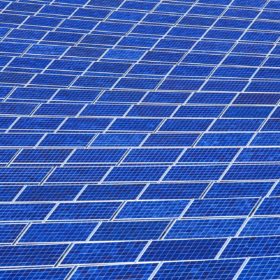
The Ministry of Energy of Republika Srpska is seeking proposals for its first large-scale PV project. The solar park is planned to be located in Bileća, in Bosnia’s southernmost part.

Slovakian government hands out €700,000 for residential solar in just 36 minutes
The national Green Houses Program grants incentives for the installation of solar water heaters, PV systems with a generation capacity of up to 10 kW, heat pumps and small wind turbines.

Finnish solar manufacturer extends vital fundraising exercise again
Valoe Corporation has extended its €3.5m convertible bonds issuance but with investors fleeing to safe havens and Lithuania yesterday announcing COVID-19 quarantine measures, hopes of getting cell manufacturing off the ground in Vilnius this month appear unrealistic.
Cheaper flow batteries with new membrane
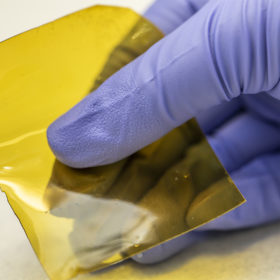
US scientists claim to have discovered a membrane which could lead to cheaper large scale flow batteries. The material is an ion-selective, aqueous-compatible polymer with intrinsic microporosity known as AquaPIM and is said to have tunable thickness and high conductivity in aqueous electrolytes.

Talesun to bet big on advanced technologies
Chinese solar manufacturer Talesun has announced plans to raise up to $226 million to expand PV cell and module production capacity by up to 2 GW, with a focus on heterojunction and TOPCon technologies.

Mozambique kicks off minigrid tender
The Mozambican Energy Fund and the Belgian Development Agency have kicked off a tender to facilitate the construction of five solar minigrids to improve rural electricity access in the southern African nation. Prospective developers have until the end of the month to express interest.
