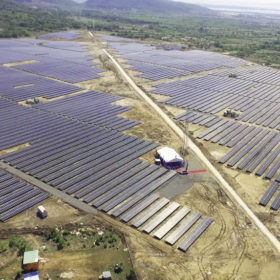
Vietnam overtakes Australia for commissioned utility scale solar following June FIT rush
Norwegian consultancy Rystad Energy has placed the Australian and Vietnamese solar markets side by side and found the Southeast Asian country left its rival trailing in terms of commissioned utility scale PV capacity. A staggering 4.46 GW of connected PV capacity in Vietnam at the end of June came as a surprise to many.

Ideematec banks new investment worth millions for business expansion
The solar tracker supplier is benefiting from a steadily growing PV market and has inked a deal with ABN AMRO Energy Transition Funds for new capital to expand its operations.
EY blog warns grid operators ‘the clock is ticking’
The energy transition is accelerating, Ernst & Young global energy leader Benoit Laclau has warned grid operators, thanks to the confluence of digitization, decentralization and decarbonization. Traditional utilities must get with the program or be swept aside.

South Australia gives 500 MW solar farm plus 250 MW battery plan the go-ahead
One of Australia’s largest utility scale solar arrays – and the biggest energy storage facility – has secured approval.

‘Anti-dumping duty on coated steel will impede solar growth’, Indian ministry warned
Citing the risk to solar projects, lobby group the National Solar Energy Federation Of India has asked the Ministry of New and Renewable Energy to exclude flat steel products coated with alloy of aluminum and zinc from anti-dumping duty.
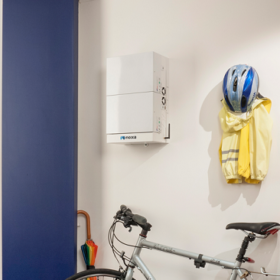
Moixa contracted under residential flexibility power scheme in the UK
U.K. Power Networks has tendered 18.2 MW of flexible power capacity to six companies across eight regions. With regular feed-in returns hanging in the wind in the U.K., flexibility and peak time management payments could be an alternative source of income for the solar industry.

Lightsource BP acquires 1.9 GW of Brazilian solar projects
The developer has announced a major portfolio acquisition. London-based Lightsource says it has acquired 1.9 GW of solar generation capacity in various stages of development from Brazilian developer Enerlife.
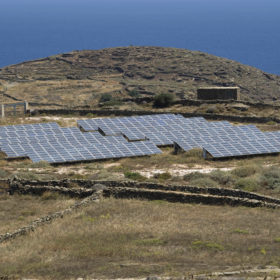
Greek tender awards 143 MW of PV at €0.06195/kWh
Greece’s fourth tender exercise for renewables this year took place on Monday and allocated solar and wind power projects in separate sections of the procurement round.
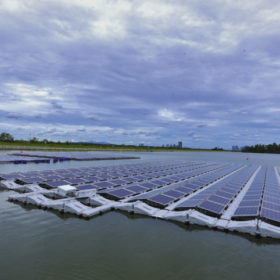
Singapore preps SE Asia’s ‘largest public floating solar tender’
The water authority of the city state wants to procure a 50 MW floating solar installation on the Tengeh Reservoir that will be operational by 2021. Details were revealed today by technical consultant DNV GL.

Unlocking lithium metal’s stored potential
Several new concepts in lithium-ion storage technology have the potential to greatly the increase the energy capacity of batteries. Among them are lithium metal anodes, which could potentially increase energy density by more than 50%. With a newly optimized electrolyte, scientists at the University of California, San Diego have taken another step toward making the idea a commercial reality.
