
Five takeaways from the Africa Energy Forum 2019
At the 21st AEF, held last week in Lisbon. pv magazine had two journalists on the ground and here reports on five key findings.
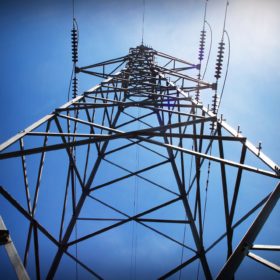
China’s grid planners could learn from European experience
The world’s biggest solar market is on track for an unsubsidized future but policymakers continue to grapple with grid planning. A report by the German Energy Agency has offered suggestions on how China’s approach to grid design could be tweaked to ensure priority dispatch for PV while slashing administrative costs and reining in renewable energy losses.
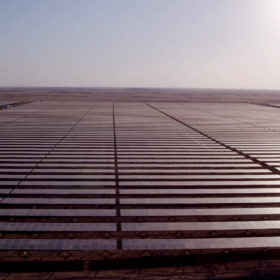
Ib vogt finishes 166.5 MW solar system at Benban
The German PV company had reached commercial operation of the first batch of its project at the huge Egyptian solar park in February 2018. Participants in the 1.8 GW solar park receive tariffs set in the nation’s second FIT tender round.
Solar, storage and wind can keep us on track as far as 2030
This year’s New Energy Outlook report by Bloomberg New Energy Finance predicts renewables can keep us on track for less than two degrees of global heating for the next decade. But after that, other technologies will have to do their bit.

The Sunshine State is finally living up to its billing
Scottish consultancy Wood Mackenzie has raised its 2019 forecast with Florida and Texas starting to deliver on their potential as the U.S. solar market returns to growth.
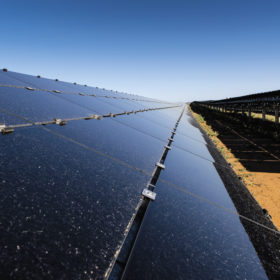
Renewables are mainstream but sector coupling is progressing too slowly
More than a quarter of global electricity is generated from renewables, with solar the third largest source according to an annual overview drafted by global policy network REN21. Despite a year-on-year fall, solar accounted for the majority of generation capacity additions last year. But a lack of decarbonization policies across the heating, cooling and transport sectors puts a patchy energy transition in prospect.
Xinyi revises plans for shares placement
The glass maker is set to issue fewer shares – at a higher value – in its solar glass subsidiary as it aims to generate funds for two new PV glass production lines in China.
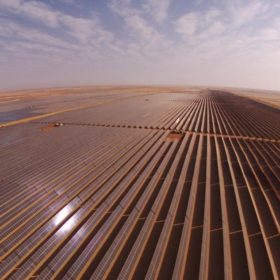
An overview of the world’s largest solar power plants
In the third of a series of four blogs, solar pioneer Philip Wolfe lists the world’s largest solar power plants. In these articles, a ‘solar plant’ is defined as an individual generating station.
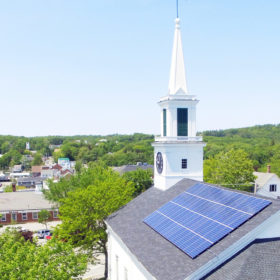
The Pope, big oil and bankers are talking carbon taxes
Pope Francis held a closed door meeting at the Academy of Sciences with the CEOs of oil firms and investment firms to address climate change, with a group committing to support an “economically meaningful” carbon price.
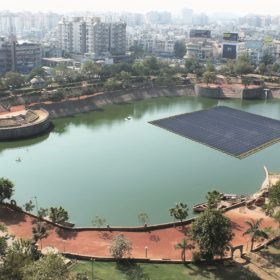
SERIS reaffirms TW-scale potential for floating PV as global installs pass 1.3 GW
More than 1.3 GWp of floating solar capacity has already been built throughout the world, according to a new report, with the Solar Energy Research Institute of Singapore reaffirming its belief that the global potential for floating PV is in the terawatt range.
