
Solar could bring 200,000 jobs to the UK by 2030 – but only with government backing
As the solar industry digests yesterday’s announcement by Theresa May of a net zero carbon ambition by 2050, developer Solarcentury says Downing Street is hugely underestimating the role PV can play in achieving that milestone.
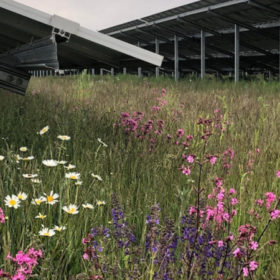
Why solar parks should replace agricultural land
This year’s Earth Overshoot Day falls on Friday, August 2. The current UN report on biodiversity protection does not report anything good. At least two reasons for our children to demonstrate on Fridays so that we not only talk, but act, says Ralf Schnitzler, project developer, solar parks, Bejulo GmbH. He believes that now is the time to take the energy revolution seriously. Below, he lays out his arguments and ideas on how the energy transition and other transformations could be possible with solar parks.
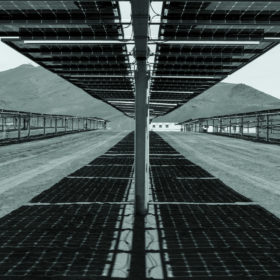
Bifacial beats Trump’s tariffs
Federal trade authorities have ruled that bifacial solar modules are no longer subject to the Section 201 ruling, which currently apply a 25% tariff to most solar modules imported to the United States.

PV industry calls for clarity on UK government’s 2050 emissions target
Representatives of the UK solar industry have praised prime minister Theresa May’s plan to amend the 2008 Climate Change Act with a 2050 net zero emissions target while urging the government to articulate how it will achieve its goal. In particular, the industry has pointed to the need to eliminate barriers that continue to hinder deployment of solar and battery storage systems.
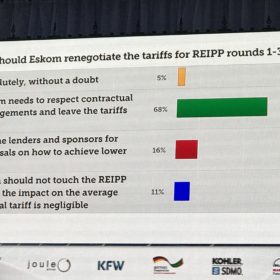
‘PPA deals signed under the opening three rounds of the REIPPPP must be renegotiated’
A representative of South Africa’s energy regulator said deals signed between 2011 and 2013 must be subject to lower tariffs to ease the financial crisis at national utility Eskom. The suggestion failed to convince delegates at an Africa Energy Forum panel discussion in Lisbon, however.
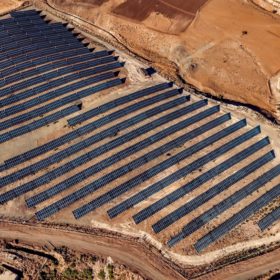
Enerray enters insolvency proceedings
Italian industrial group Maccaferri, the parent company of the insolvent EPC contractor, has also filed for insolvency for another three units of its energy business.

Video: Longi launched the HiMo4 mono-PERC series at Intersolar Europe
Winfried Wahl, head of product management at Longi Solar spoke to pv magazine about how the HiMo4 has a 15% higher power output than the previous iteration in the series.

U.K. government announces 2050 carbon neutrality ambition
Leaving with a last hurrah, Brexit casualty prime minister Theresa May has announced a statutory instrument to amend the Climate Change Act of 2008. The law currently prescribes an emissions cut of 80% by 2050, from a 1990 baseline. The new law will aim for net zero emissions by 2050, making the U.K. the first G7 nation to pass such legislation.

Plug-in hybrid cars have as much longevity as Betamax and MiniDiscs – stick to pure electric
A report on the prospects for a mooted $2.6tn electric vehicle market over the next decade says PHEVs – part electric, part gas-guzzling – are already losing market share rapidly to pure electric rivals, and will be extinct by 2030.
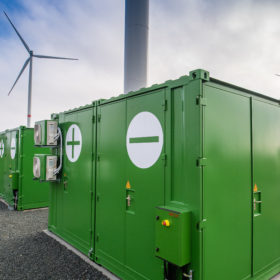
India’s lithium gigafactory ambition raised to 50 GW, tender likely soon
The government is considering financial incentives such as import and export duty waivers to woo battery manufacturers to set up a globally competitive manufacturing base in India.
