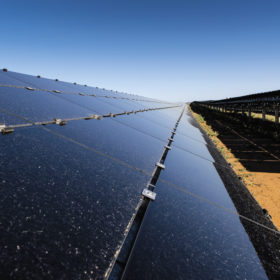
Renewables are mainstream but sector coupling is progressing too slowly
More than a quarter of global electricity is generated from renewables, with solar the third largest source according to an annual overview drafted by global policy network REN21. Despite a year-on-year fall, solar accounted for the majority of generation capacity additions last year. But a lack of decarbonization policies across the heating, cooling and transport sectors puts a patchy energy transition in prospect.
Xinyi revises plans for shares placement
The glass maker is set to issue fewer shares – at a higher value – in its solar glass subsidiary as it aims to generate funds for two new PV glass production lines in China.
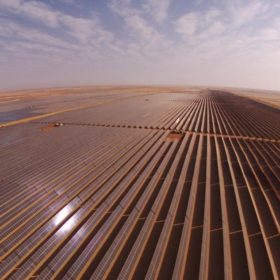
An overview of the world’s largest solar power plants
In the third of a series of four blogs, solar pioneer Philip Wolfe lists the world’s largest solar power plants. In these articles, a ‘solar plant’ is defined as an individual generating station.
The Pope, big oil and bankers are talking carbon taxes
Pope Francis held a closed door meeting at the Academy of Sciences with the CEOs of oil firms and investment firms to address climate change, with a group committing to support an “economically meaningful” carbon price.
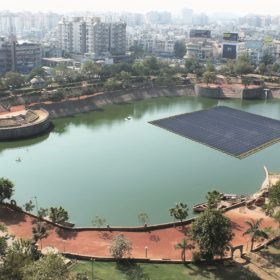
SERIS reaffirms TW-scale potential for floating PV as global installs pass 1.3 GW
More than 1.3 GWp of floating solar capacity has already been built throughout the world, according to a new report, with the Solar Energy Research Institute of Singapore reaffirming its belief that the global potential for floating PV is in the terawatt range.
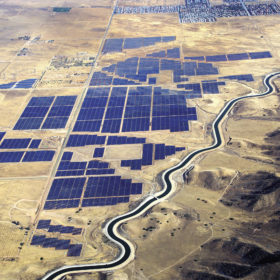
JinkoSolar delivers 258 MW for PV-wind project in Vietnam
The Chinese manufacturer has supplied 258 MW of monocrystalline PERC double glass modules to Trung Nam Group. It claims the project is one of the biggest solar-wind installations in the Southeast Asian country.
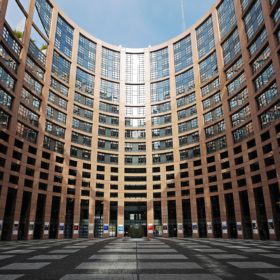
Europe’s 2050 carbon neutrality plans back on the agenda
Reports about a leaked document suggest that Germany, Italy, Greece and Slovakia have joined a group of EU member states that support a carbon neutrality bill. Germany refused to support such plans in March, but with political support for the German Green Party skyrocketing, Chancellor Angela Merkel is likely to revise her government’s position. With Germany now on the ticket, a plan could be finalized at some point this year.
EU publishes directive, regulations for Clean Energy Package
The two documents urge member countries to adopt more favorable legislative frameworks to help improve operation of renewables and distributed generation in relation to other energy networks of gas or heat. The new provisions are also expected to facilitate the development of energy communities and aggregators, while opening the market for flexibility services to small power producers.
IEA report outlines ‘Future of Hydrogen’
The G20 meeting of environment and energy ministers on the weekend in Karuizawa, Japan, came out largely in favor of adopting lower-emission energy technologies. That means cleaner coal, as well as the development of solar- and wind-powered green hydrogen.
US State Dept issues strategy to diversify clean energy, storage supply chains
The Trump administration is acknowledging global demand for clean energy and energy storage with the US State Department’s new strategy.
