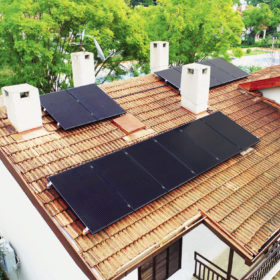
Turkey introduces net metering for residential PV and new rules for unlicensed solar
The government has finally issued a net metering scheme for solar systems not exceeding 10 kW of generation capacity – the country’s first attempt to support small scale PV. New rules for larger, unlicensed projects have also been introduced, with the size limit for eligible systems raised to 5 MW.
100 GW: PV in its teens
With almost 100 GW commissioned in 2018 (the same level as in 2017), the PV market was stable at a global level, writes Becquerel Institute’s Gaëtan Masson. This hides different market developments, as for example the decline of the Chinese PV market from 53 to 45 GW, and growth in other markets. The global market, exempting China, grew from 41 GW in 2016 to 46 GW in 2017, a rather big jump as it reached close to 55 GW in 2018.
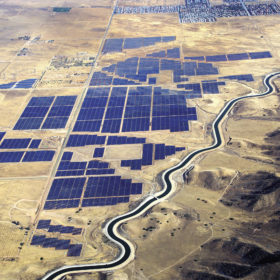
The weekend read: The sustainable pioneers
In the coming weeks, months, and years, pv magazine will be digging deeper and expanding our sustainability horizons, defining – with your help – the most effective courses of action. What follows is an overview of current sustainability initiatives in the solar and, to a lesser extent, storage industries.
SEIA’s solar+ plan falls short on ambition
The Solar Energy Industries Association’s “ambitious goal” of solar supplying 20% of U.S. electricity in 2030 looks more like a forecast, and vision for rapid decarbonization is coming from the climate movement and the American Left, not SEIA.
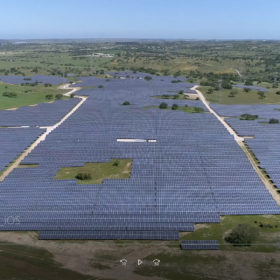
Legislative amendments pave way for Portugal’s 1.35 GW solar auction
The Portuguese government has approved legislative amendments that it says will facilitate its plans to auction off 1.35 GW of solar capacity this summer. The Portuguese energy minister, meanwhile, said that the government hopes to see €6 billion of investment in solar by 2030.

Solar leads all forms of energy in digitalization: DNV GL
In a recent survey, DNV GL found that demand for blockchain-related skills in the solar sector is 50% higher than in other energy industries, while 33% of respondents said that the use of drones is having a significant impact on their businesses. However, the solar industry needs a common framework to help advance digitalization further.
Holaluz, Chint Energy sign deal for 500 MW of solar in Spain
Spain’s Holaluz has agreed to buy electricity from up to 500 MW of solar capacity that China’s Chint Energy plans to build in Spain. The investment has been estimated at roughly €350 million.

Australia’s climate election: Where do parties stand on renewables?
As Australia’s federal election campaign slowly grinds to a halt, one thing is indisputable: Climate change has emerged as the make or break issue in this year’s election. The main parties have come up with a wide range of policies, but some of them are more supportive of the green energy sector than others.
Tesla acquires Maxwell Technologies
It’s unclear exactly what the interest is in the California-based supercapacitor maker, but it could be more about the process than the product.

Intersolar Europe: Day 3
Welcome to the final day of Intersolar Europe 2019! Follow pv magazine live to keep updated on the latest solar PV and storage developments, events and trends from this year’s event, as they happen. Stay tuned!
