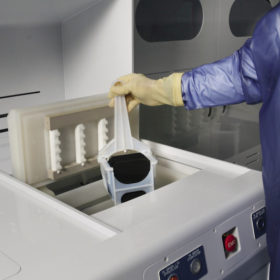
The blackest black for more efficient solar cells
MIT scientists claim to have created a material 10 times more black than anything witnessed to date. It is said to be able to absorb more than 99.96% of incoming light and reflect 10 times less light than other superblack materials. The invention may be interesting for the development of black silicon PV technology and carbon nanotube-based solar cells.
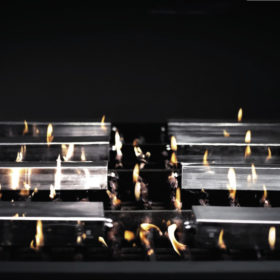
Safety is paramount
When Sony first commercially introduced lithium-ion batteries in 1991, the industry recognized their potential to revolutionize portable electronics. Ever since, there have been countless efforts to improve the technology, with many researchers focusing on energy density and longevity, in line with demand from emerging applications such as electric vehicles (EVs) and on-grid energy storage. Julian Jansen and Youmin Rong of IHS Markit discuss the effect of safety concerns on this rapidly growing global market.

Korea’s South Jeolla province is becoming a solar hub
According to Korean government, around 18,000 unlicensed projects up to 1 MW in size are being developed in the area. Restrictions on such projects, which are driving this year’s strong solar growth in the country, are being introduced to reduce their environmental impact.
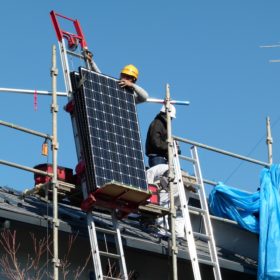
Austria mulls mandatory PV as new rebates for solar and storage launched
With the region of Styria considering making PV mandatory on all new buildings, the nation’s Climate Fund will support PV and storage projects in agriculture and forestry. Applications can be submitted by November 2020 – or until the pot is empty.

European electricity and fuel market prices rose last week
AleaSoft analyses fuel market prices, carbon emission rights, European electricity markets and renewable energy production. Last week most prices rose on the previous reporting period as solar and wind power production varied by country.

‘Mono will supply 80% of the world’s solar by 2021’
Polysilicon manufacturer Daqo has announced the start of pilot production in Xinjiang and expects to ramp up to full output by the end of the year, doubling the company’s annual capacity to 70,000 MT. Some 90% of its poly will be mono by that stage and Daqo expects 40% to be suitable for n-type products next year.

Brazil’s Cemig contracts renewable power from 197 MW of project capacity
Solar and wind projects selected in the company’s latest clean energy procurement exercise have been awarded a 19-year power purchase deal, starting from 2023. Cemig has now contracted green power from 780 MW of renewable project capacity in three tender rounds held since June last year.
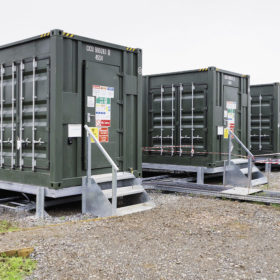
Solar-plus-storage vs grid enhancement, part IV
Co-location of solar and storage may accelerate the deployment of profitable merchant renewable energy projects in the United Kingdom, according to a report by Aurora Energy Research. The study predicts installed solar capacity in the U.K. may increase from around 13 GW next year to 19 GW in 2030 and 32 GW in 2040.

‘The world has no chance of beating climate change if natural gas is part of the mix’
A report by Germany’s Energy Watch Group thinktank has said we would be better off sticking to coal and oil than switching to gas because emissions of methane, the most potent greenhouse gas, caused by gas extraction render any related carbon savings irrelevant.

Sahel regional leaders give new push for 10 GW Desert to Power initiative
The African Development Bank last year disclosed a plan to install 10 GW of solar in the deserts of the Sahel. A recent summit held in Burkina Faso may have brought the ambitious project a step closer.
