
Sonnen to provide primary balancing power to German grid from networked home storage
After months of preliminary work, the time has come: With its PV+home storage network, sonnen GmbH has received prequalification from TenneT to participate in Germany’s primary control energy market. While it is currently allowed to deliver 1 MW, the goal is to supply 100 MW.

Finding the optimal solar cell design to maximize energy production
Researchers in Spain have proposed a new standard for solar cell testing, which they say could enable more accurate determinations of a cell’s annual energy yield. Using machine learning, the method processes data sets consisting of thousands of solar spectra, creating representative examples which can then be used to predict average annual efficiency.
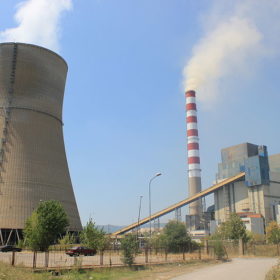
EBRD urges Western Balkans to replace 18 GW of coal with renewables
The EBRD has released a brief urging Western Balkan countries to both replace their aging lignite coal generation capacity with renewables, and to rethink their 18 GW plans for new coal capacity. While the region offers favorable conditions for various types of renewable generation, it has been slow on the uptake to date.
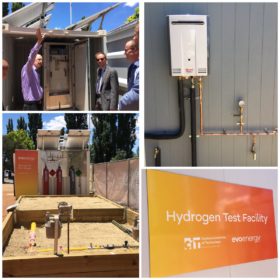
Australia’s first hydrogen test station opens in Canberra
ACT gas network operator Evoenergy and the Canberra Institute of Technology have partnered to build a first of its kind hydrogen test facility at CIT Fyshwick. The station will test up to 100% hydrogen in deployments in which natural gas is currently used.
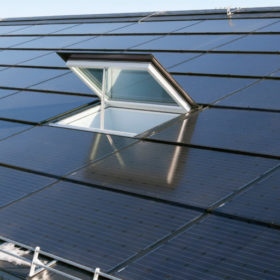
Switzerland’s third largest canton launches $3 million incentive scheme for solar-plus-storage
The scheme will provide incentives for solar-plus-storage projects for self-consumption, as well as for projects for virtual power storage.
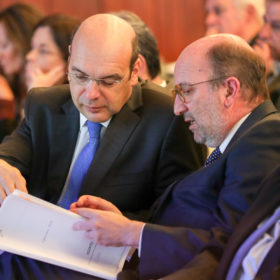
Portugal aims for 100% renewables by 2050
Solar is expected to play a leading role in the Portuguese Government’s new energy plan, which includes the goals of covering 80% of the country’s total power demand with clean energy by 2030, and electrifying 65% of its economy by 2050.
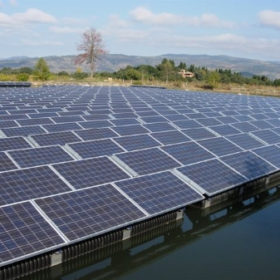
Floating PV conquers two new countries
This time, the countries revealing their first floating PV plans are Albania and the Ivory Cost. In the first, a 12.9 MW plant is being proposed by local hydropower producer KESH, while in the second, the local government has secured funds for what it claims will be Africa’s first floating PV array.
Mexico suspends upcoming auction for renewables
The Mexican National Center for Energy Control (CENACE) has announced that the fourth long-term auction has been temporarily suspended, due to changes in the management of CENACE and in the Federal Electricity Commission.

EU confirms increased renewables ambition as an early Christmas present
Political bloc wants to source at least 32% of energy from renewable generation by 2030 and signed off on the more ambitious target as a statement of intent during the first week of the Katowice climate change conference.
Jordan gets $265 million loan to improve grid capabilities, integrate more solar
The funds, provided by the European Bank for Reconstruction and Development, will help utility NEPCO repay short-term debt, as well as financing expansion of the grid’s capability to increase the share of solar and other renewable energy.
