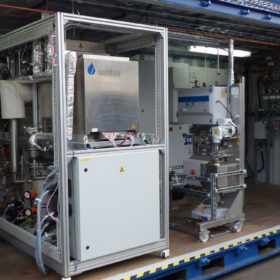
Power-to-X gains momentum on two fronts in Germany
Two power-to-gas projects promise to improve the technology. In Brandenburg, Edis and Gasag want to transform renewable power into hydrogen, driving sectoral coupling. And Sunfire has switched on its first co-electrolysis project.

Enel touts €1bn green bond and bags 70% of Polish demand response market
The energy giant’s finance subsidiary placed a bond in Europe to finance its renewable energy and infrastructure projects and secured 70% of Poland’s demand response capacity market for the 2021-2023 period, in the first auctions of their kind in the nation.

American utility PG&E set to file for chapter 11 bankruptcy
The Pacific Gas and Electric Company, founded 114 years ago, is filing for bankruptcy and may be broken up by regulators. None of which is good news for solar project owners holding contracts with the utility.

Investment funds scramble to acquire Indian giant’s 1 GW assets
Global Infra Partners, KKR, Brookfield, I Squared Capital and Macquarie are reported to be among those eyeing the renewable energy assets of debt riddled Infrastructure Leasing and Financial Services.
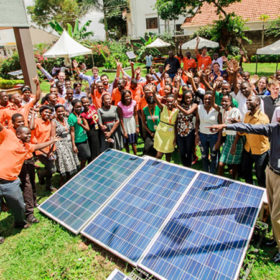
SolarNow to bring off-grid PV to 17,500 more Ugandan homes
The domestic company has cleared a third debt funding facility of $9 million with Kenya-based SunFunder, responsAbility and Oikocredit. The credit means 2.5 MW of off-grid capacity, enough to bring energy to 70.000 people.
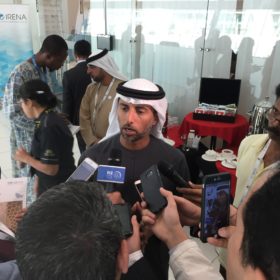
UAE minister and OPEC chief says IRENA’s solar forecasts for Gulf nations will prove conservative
With the International Renewable Energy Agency’s number-crunchers predicting almost 5.4 GW of new solar across the six Gulf Cooperation Council nations today, Suhail Mohammed Faraj Al Mazroui said his nation alone would install 6-7 GW of new renewables capacity by 2024, as pv magazine editor-in-chief Jonathan Gifford reports.

Statkraft plans its first floating solar plant in Albania
Norway’s state-owned hydropower and wind company intends to deploy a 2 MW floating installation at its 72 MW hydropower plant in Albania’s Elbasan district.

Solar stars at new-look Zayed Sustainability Awards
A Californian company which provides PV power to maternity clinics in the developing world was an award winner alongside British pay-as-you-go electricity provider BBOXX. And a school in Tajikistan which aims to go fully solar powered secured a cool $100,000 towards that ambition.
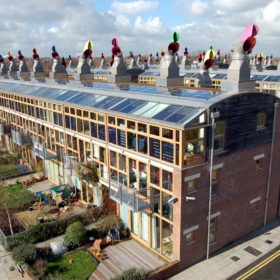
EU issues £1.9 million grant to Britain for PV and energy efficiency
The UK cities of Bristol and Plymouth and the county of Devon will get £1.9 million to develop energy efficiency, sustainability, and clean energy projects. Bristol in 2014 received a £50 million grant to accelerate its plans to be carbon neutral by 2050. Devon has ambitious plans of becoming 80% carbon neutral by the same date.
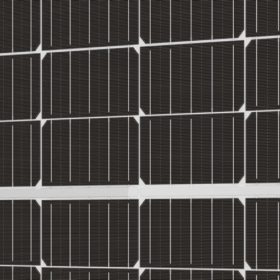
Webinar Q&A: “Are half-cut cell modules the future?”
Many manufacturers are converting large parts of their production capacities to half-cut cell technology. Is this a niche or will the traditional full cell module eventually disappear? The use of the new technology has clear advantages for manufacturers and buyers, say the experts.
