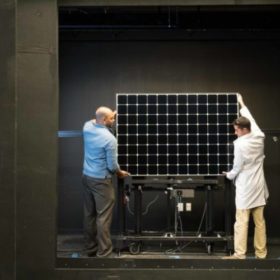
Solar module lifetime predictions are getting better
NREL has proposed a new methodology for determining solar module degradation rates, taking into account measurement challenges such as sensor drift, inverter nuances, soiling and others – keeping the focus on the solar modules themselves.

UK grants £9.5 million for smart energy systems
The United Kingdom has announced £9.5 million (around US$12 million) in funding for the creation of a new research consortium and 12 projects to speed the uptake of smart energy systems.

Switching to solar could save aid missions half a billion per year
A new report published by Chatham House for the Moving Energy Initiative examines energy spending of humanitarian aid organizations. The authors claim that with modern clean energy systems the sector could save US$517 million per year on fuel costs, as hitherto the majority of refugee camps and other facilities are run on diesel gensets.
Over 400 investors call on world’s leaders to address climate change
A total of 414 investors managing US$32 trillion in assets have called on the world’s policy makers to take action against climate change. It has been called the “single largest policy intervention” of its kind.
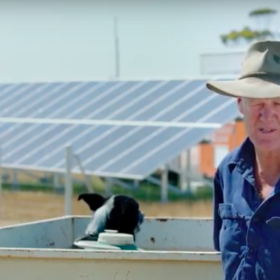
World’s largest distributed energy management system to be deployed in Western Australia
PXiSE will deploy its Active Control Technology to manage up to 50,000 distributed energy resources across Horizon Power’s 2.3 million square kilometre network, which it says will enable higher levels of renewable energy.

Australia’s QUT discovers process to lower the cost of renewable hydrogen
Hydrogen holds promise for harnessing renewables to produce clean fuel for transport, growing a green energy-export industry, and overcoming seasonal intermittency challenges in the grid. On the road to viable hydrogen production every cost-efficiency measure counts.

Regional EU leaders demand clarity for energy communities
Consumer- and municipally-owned energy systems are lauded as key elements of the energy transition. However, their market design in many regions is still prohibitively complex. The European Committee of the Regions has presented a policy recommendation to address these issues, and enable a just and democratic energy transition.

COP24 live blog – Day 1
Max Hall will be attending the COP24 climate change conference in Katowice, Poland on behalf of pv magazine and bringing you all the developments as they happen, as well as sniffing out anything solar related.

India: Maharashtra discom issues 1 GW tender with tariff cap
The Indian state is looking to install 1 GW of new solar PV power under a new tender issued. A ceiling tariff of Rs 2.80 (US$0.039) has been set.
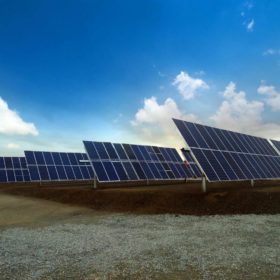
Wind, solar could be self-financing by 2025 under current European electricity market design
According to a report from the Centre on Regulation in Europe (CERRE), lower capital costs for large-scale wind and solar projects, and much higher fossil fuel and carbon prices could lead to renewables becoming self financing by 2025. If these conditions do not materialize, more auctions and tenders may still be needed.
