
New technologies move to the back
The tension between the cost cutting and performance boosting opportunities presented by new technologies and the tendency for risk aversion is never more evident than in PV module materials. This applies nowhere more than in backsheets, where new innovations are big on promise, but must convince manufacturers and the market of their long-term performance.

Joules Power to set up 100 MW solar plant in Bangladesh
Bangladesh-based Independent Power Producer (IPP) Joules Power Ltd (JPL) will install a 100 MW solar farm in the south eastern Chandpur district.

US solar stocks dragged down as market falls
The biggest crash in the U.S. stock market in the last 10 years has hit solar stocks, but for the solar coaster this is nothing new.

3: PV’s day of judgement
China continued to take center stage in Q3 2018; however the focus shifted from its now notorious policy change. In both positive and negative news, Europe announced the end of the MIP, at almost the same time as the United States slapped tariffs on Chinese imports of inverters, AC modules and non-lithium batteries. Yin yang. Ping pong.
Unlocking Scandi-candy for PV projects in developing countries
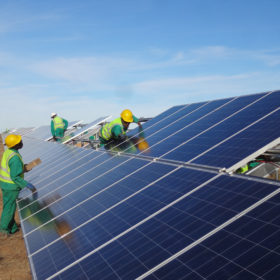
A new report suggests that better guarantee mechanisms and securities could unlock more investments from Scandinavia for renewable energy projects in developing countries. Overall, however, it finds that Norway, Sweden and Denmark have comprehensive mechanisms in place for bringing together industry and public support schemes.

Now or never for the EU
The European solar industry is on its knees, but the EU appears willing to set a course for reconstruction. With SolarPower Europe and the European Solar Manufacturing Council, there are now two associations that are actively advancing a course for strong solar industrial policy among the EU bureaucrats in Brussels. The goals, however, are somewhat different.
2: And let the solar games commence
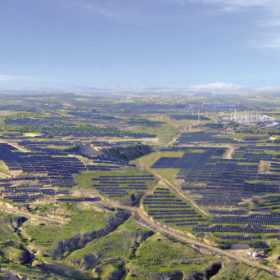
While China’s PV policy announcement dominated the headlines in Q2 2018, there were a lot of other significant happenings in the world of solar, not least the EU’s 32% renewable energy targets, rumors of U.S. tariffs on inverters, PV records in Germany, and unexpected new partnerships. Read on to discover the highlights from April to June.
Filling in the (micro)cracks
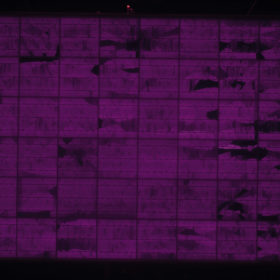
Whether caused by improper production processes, poor treatment in transport and installation, climate conditions or any other issue, performance reducing microcracks are a major source of stress for PV developers and project owners. Now, an EU funded research project has found that a different type of stress could provide a solution, and even “heal” some existing cracks.
1: What a difference a year (in PV) makes
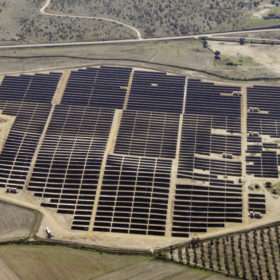
Dire warnings about the state of our planet characterized 2018, with a plethora of reports released calling for climate action. The solar PV, and storage, industries have a leading role to play in the required energy transition: this bold quest was taken on by many over the last year, with technological progress and expansion seen upstream and downstream, and in policy, globally. Like last year, China took all by surprise, this time, however, in the form of its abrupt 31/5 policy change, the effects of which are still being felt in almost every corner of every market. And of course, Tesla grabbed the headlines – also for rather more unsavory reasons than in 2017. In this first out of a total of four posts pv magazine reflects on Q1.

Pennsylvania’s largest solar farm to power Philly government buildings
The 70 MW Adams solar farm will be by far the largest in the state when completed in 2020 and its electricity will power 22% of the demand from Philadelphia government buildings.
