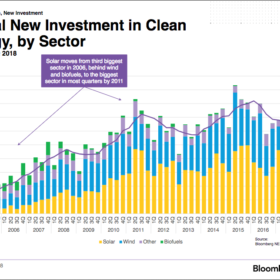
Global solar investment drops due to low project costs, China policy change
While overall global investment in clean energy saw a decrease of just 1% YoY in the first half of 2018, solar’s share dropped 19% following changes to China’s PV policy and lower project costs, says Bloomberg NEF (BNEF). It forecasts this trend to continue throughout the year.
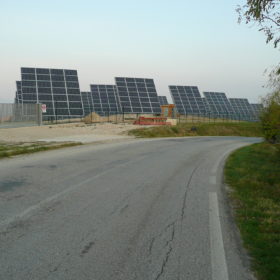
Italian government challenges Sicily’s moratorium on solar parks
The Italian Council of Ministers said that Sicily’s temporary suspension of all approvals for large-scale wind and solar project is unconstitutional.
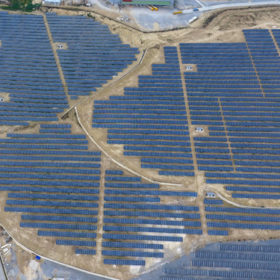
Turkey authorizes foreign-currency loans for already approved unlicensed PV projects
The measure is intended to reduce domestic foreign exchange exposure for investors and developers of PV projects up to 1 MW (and solar parks consisting of several 1 MW units). Prior to these new rules, only licensed PV projects exceeding 1 MW in size were granted this kind of financing.
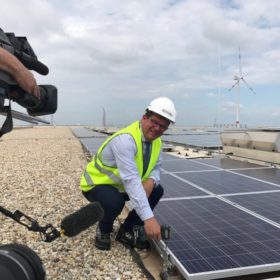
Belgium: Flanders to allow direct lines for solar, RE starting from 2019
A new amendment to the region’s energy law allows enterprises to sell power to one other through the so-called direct line model, starting from 2019.

Lower module pricing will bolster PV deployment in India
More than 80% of India’s solar equipment requirements are met through imports from China. Against this backdrop, industry analysts see the predicted 30% lower module pricing, following China’s revised policy, as a good news for Indian PV projects.
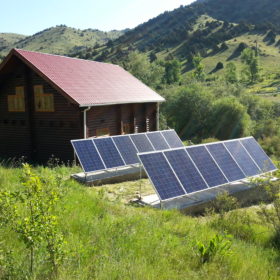
The weekend read: Central Asia’s green horizons
Despite its huge potential in the region, solar PV has hitherto gained little traction in Central Asia. In Kazakhstan, two utility-scale PV projects have been realized, and a few are in the pipeline for Uzbekistan as it begins to attract international investors. But many challenges on the policy level have yet to be overcome.
GCL-Poly cranks up its share repurchase program again
Polysilicon manufacturer has been busy repurchasing chunks of its stock, the question analysts and investors will be asking is, why?
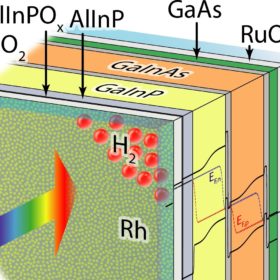
New solar water-splitting cell demonstrates 19.3% efficiency, increasing longevity significantly
The cell uses a novel approach that increases its conversion efficiency and longevity at the same time. Researchers claim it is a new world record for this type of application and highlight its importance in storing renewable energy in hydrogen to compensate for output and demand fluctuations.
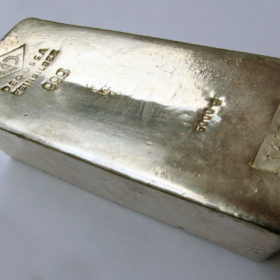
Amount of silver needed in solar cells to be more than halved by 2028, Silver Institute says
The US-based industry association finds the amount of silver loading may fall from 130 mg per cell in 2016 to approximately 65 mg by 2028. Alternative and cheaper raw materials, such as copper and aluminum, are not expected to replace silver in commercial cell production, at least in the next decade.

Guyana secures financing for 100 MW solar project
The $80 million scheme is expected to be financed by the Inter-American Development Bank, with the support of the Norwegian government. The funds concerned were originally to be devoted to a hydropower project.
