
China installed 44.1 GW of solar in 2018, according to official NEA data
The world’s biggest solar market reached a cumulative installed PV capacity of 174.63 GW at the end of last year.
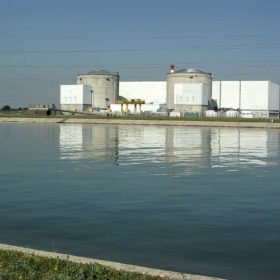
EU approves France’s plan to replace nuclear plant with 300 MW of PV
The European Commission said the subsidy scheme to be adopted for the project is in line with the EU state aid rules. The 40-year old Fessenheim nuclear plant has faced several safety issues over the decades.

The weekend read: Why are we not making the most out of big data analysis?
Although the solar industry sees itself as young, its assets are aging. Owners still struggle with the complexity of making the best use of big data analysis to improve plant efficiency and profitability. Ragna Schmidt-Haupt, of Everoze, examines why this has not changed, and what can or should be improved. Artificial intelligence, advanced data analytics, automated assessments and smart monitoring software – holistic solar asset management starts here.
11.7 MW of bifacial solar goes online in the Netherlands
The panels were provided by Chinese manufacturer Jolywood, which claims the Zonnepark Rilland project is the first utility-scale solar plant built with n-type bifacial modules in Europe.

Middle East solar pioneers have their efforts recognized
DEWA projects featured strongly in this year’s accolades but there was also recognition for projects beyond the region and some eye-catching innovations.
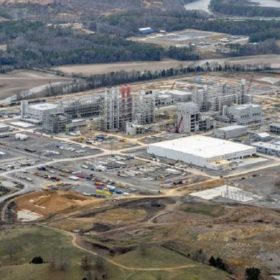
Wacker’s polysilicon business sees profit and turnover fall
The Munich-based chemical company posted an increase in sales but the fall in polysilicon prices last year and the temporary closure of US production after a hydrogen explosion had a significant impact on the results.
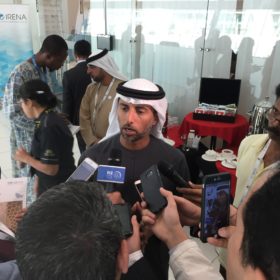
‘A swift transition to renewables would be unfair and cause chaos’
In the face of increasingly strident global calls to turbocharge the switch from fossil fuels to clean energy, remarks from the Saudi and Emirati energy ministers in Abu Dhabi this week will do little to encourage hopes the world can contain global temperature rises below 1.5C.

Hanwha Q-Cells completes internal going-private reorganization
The South Korean PV manufacturer has finalized its plan to merge with Hanwha Solar. The company will no longer be listed on the Nasdaq stock exchange and will continue as a wholly owned subsidiary of Hanwha Chemicals.
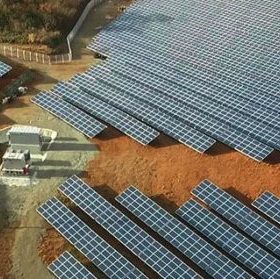
Univergy to install 400 MW of solar in northwestern Spain
The Spanish-Japanese developer wants to build two plants in the municipalities of Grijota and Herrera de Pisuerga, in the province of Palencia.
Renewables, an antidote against volatile electricity prices for the EU
The European Commission says renewables are playing a central role in lowering spot prices and stopping rises in network charges and fees. In the EU energy market, however, coal and gas still dominate, ensuring power prices are unpredictable.
