
EV charging companies to ramp up installations
The market for EVs is experiencing robust uptake worldwide with companies, governments and municipalities implementing policies to drive development. EVN and EVBox announced plans for expansion this week, and the UK government is also pouring investment subsidies into the electric vehicle market.

Challenges and solutions for anti-LID treatment
In PERC modules, both light and elevated temperature induced degradation (LeTID) and light induced degradation (LID) must be mitigated. What makes this tricky, however, is that the mitigation process of the first, counteracts that of the second, says Karin Krauß, R&D project manager, Rehm Thermal Systems. At the pv magazine Roundtable in Taipei next week, she will discuss possible solutions with cell and module manufacturers, and EPCs.
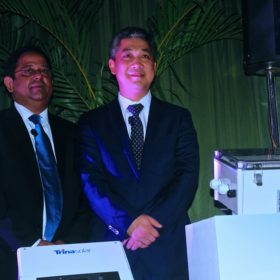
Trina Solar launches India’s first PV residential kit
Chinese PV manufacturer, Trina Solar today launched its TrinaHome product in New Delhi. It is India’s first solar residential home kit. While it is currently imported from China, the goal is to assemble it locally, in the coming months.

Gambia moves forward with first large-scale PV project
The World Bank is helping Gambian utility NAWES find a consultant for the nation’s first large-scale scheme, to be developed under the national Electricity Restoration and Modernization Project. The solar plant may have a capacity of up to 20 MW, and could be linked with a storage system.
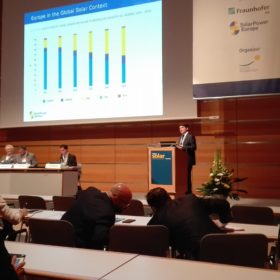
‘We are at the dawn of a solar renaissance in Europe’
Head of SolarPower Europe welcomes news of imminent Solarworld sale whilst predicting removal of EU trade barriers on Chinese-made panels will bring dormant market back to life.
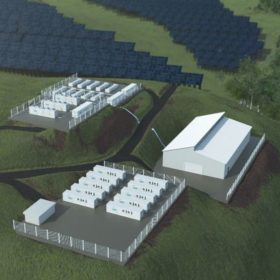
Meridiam buys 60% stake in 55 MW/140 MWh hydrogen-based solar-plus-storage in French Guiana
The Centrale électrique de l’Ouest guyanais was started by French hydrogen specialist HDF Energy in May. The $90 million plant, expected to generate 50 GWh per year, is being built near Saint-Laurent-du-Maroni in northwestern French Guiana, and will meet the energy needs of the nearby municipality of Mana.

Japan auctions 197 MW in second PV tender
The Japanese Government has wrapped up its second of three planned solar auctions, with nine companies winning the rights to build a total of 196.96 MW of commercial PV capacity.
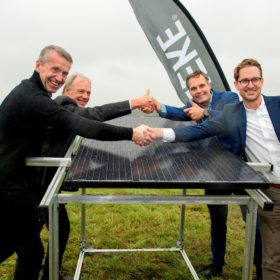
Construction begins on Sweden’s largest PV plant
The 5.5 MW facility was built by power company Göteborg Energi. The solar plant, in Säve, near Gothenburg, is intended to increase the utility’s generation capacity from renewable sources.
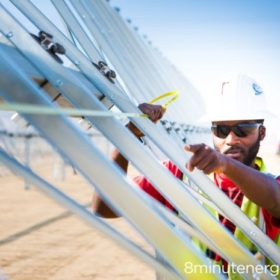
US southeastern states take the lead in utility-scale solar as interconnection queues swell to 188 GW (w/charts)
As a further sign that solar is going mainstream across the United States, a new report by Lawrence Berkeley National Labs finds that southeastern states hosted 40% of the utility-scale solar installed nationally in 2017. Interconnection queues have swelled to 188.5 GW of utility solar capacity, eight times more than installed capacity

Denmark issues tender for solar projects up to 1 MW
Through the exercise, the Danish Energy Agency will allocate around 35 MW of PV capacity. The $16.7m tender was originally scheduled for last year.
