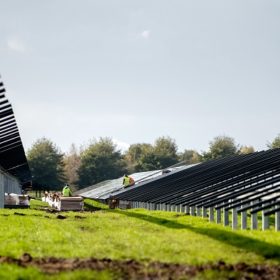
Netherlands awards 1.9 GW of PV in SDE+ 2017 autumn round
Solar was once again the source with the largest share in the latest round of the SDE+ program for large-scale renewable energy projects. Around 1.3 GW of pre-qualified solar projects, however, has been rejected. Among the selected projects is a 109 MW solar park planned for the province of Groningen.
SMA confirms guidance for 2018
In the first quarter, SMA saw its sales increase slightly, while EBITDA improved compared to the same period of the previous year. Net profit, however, was significantly below the level of the first quarter of 2017.
Spain’s Unieléctrica enters solar business with 50 MW project
The Spanish power trader is planning to build its first large-scale solar power plant in the region of Murcia. The facility is intended for self-consumption and to be financed with own funds.
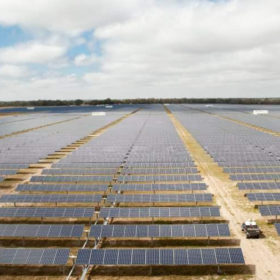
SunPower to exit utility-scale solar development
The company is pivoting to DG solar and expanding its manufacturing as it continues to struggle with profitability.
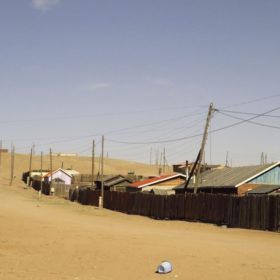
Mongolia’s largest PV power plant financed by EBRD & partners
The European Bank for Reconstruction and Development (EBRD) and investment partners will provide a $30.7 million syndicated loan to finance a 30 MW power plant, which EBRD says will be the first large-scale solar installation built in Mongolia.

Daqo Q1 2018 results: Continued growth allows expanding production base
Following a year of solid growth, the Chinese polysilicon supplier’s financials indicate that last year’s strong growth was sustainable.
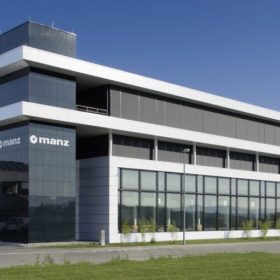
Manz posts 81% revenue growth in first quarter
Sales were particularly strong in the solar segment. Despite the considerable improvement, the German PV equipment provider still remains in debt.
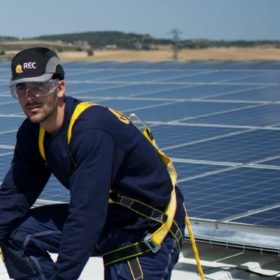
RE employs 10.3 million people, solar PV leads charge with 3.4 million jobs – IRENA
According to figures released by the International Renewable Energy Agency (IRENA), there are more than 10 million people working in the renewable energy industry. In 2017 alone, the sector added more than 500,000 jobs globally, up 5.3 % from 2016, with solar PV the biggest employer.
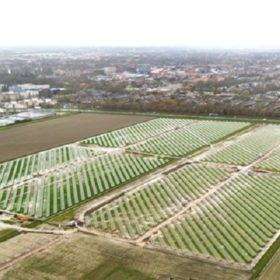
Dutch government to improve SDE+ program for sub-1 MW PV projects
The Netherlands government intends to create two more ad hoc categories for solar projects not exceeding 1 MW, and to grant them a higher level of incentive compared to those of big solar parks. The change is due the success of larger projects in previous SDE+ rounds.
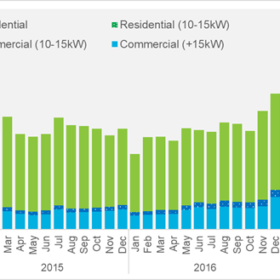
100 MW months emerge as the new normal for small-scale PV installs Down Under
Green Energy Markets’ small-scale solar figures for April reveal that above 100 MW is emerging as the new normal for monthly installations in the segment in 2018. While the month was below the record-setting 127 MW in March, April’s 109 MW indicates that installations north of 100 MW is new normal for the Australian residential and small commercial sector.
