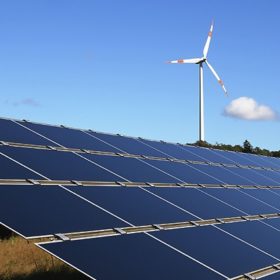
Energy demand growth doubles in 2017; wind, solar see a banner year – IEA
As global energy demand went up by 2.1% in 2017, more than twice that of 2016, renewables saw the highest growth rate of any energy source, meeting a quarter of global energy demand. According to preliminary estimates from the IEA, solar PV accounted for 27% of the growth in renewables-based power output last year.

Meyer Burger reports €67.8 million loss for fiscal 2017
The Swiss PV equipment manufacturer recorded a loss of around €68 million last year. Although Meyer Burger was able to slightly increase sales, the EBITDA margin was below 3%. This year, the company is aiming for an EBITDA margin of 10%, in order to return to profitability.

Somalia lays ground for solar development
The United Nations Development Programme (UNDP) office in Somalia has issued a Request for Proposals for the financing of a skills development program in the solar energy sector in Mogadishu, Kismayo and Baidoa.
Solargiga posts $16.96 million net profit in 2017
Solargiga Energy has recorded a net profit of CNY 107.5 million (US$16.96 million) for the year to the end of December 2017, from a net loss of CNY 239.149 million in the preceding 12-month period.
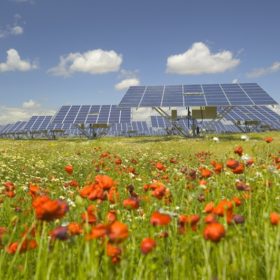
Spain has 24 GW of solar projects under review
Investments in new large-scale solar energy projects in Spain are expected to surpass €4 billion over the next two years. Meanwhile, the regional government of Castilla-La Mancha is planning to reduce the timeframe for the authorization process for solar and renewables from 12 to nine months.
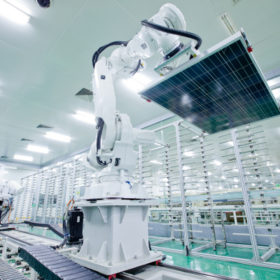
JinkoSolar posts strong shipments increase for 2017, but lower profits
Last year, the Chinese solar PV module maker shipped 9.8 GW, and achieved a revenue of US$4 billion. Both gross and net profit, however, declined due to lower ASPs, higher polysilicon prices and increased output from OEM partners.
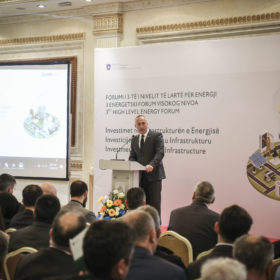
Kosovo embarks on renewables path
Although the Balkan country has recently approved the construction of a new coal power plant, Prime Minister, Ramush Haradinaj has said he intends to open the energy market to solar and wind power, an action that was recommended by the EU a year earlier.
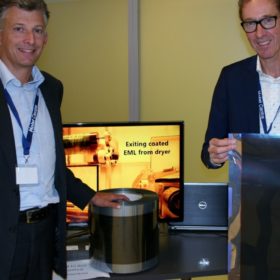
Solliance hits 26.3% efficiency on perovskite/silicon tandem solar cell
European solar research organization, Solliance and the Energy Research Center of the Netherlands (ECN) have announced the achievement of 26.3% efficiency on a transparent perovskite solar cell combined with a crystalline silicon solar cell.
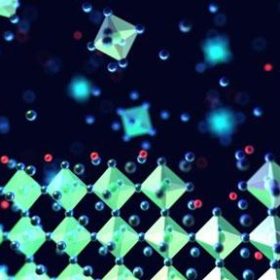
Fixing perovskite defects with potassium
Scientists led by Cambridge University have discovered that adding a simple solution of potassium to the ink solution has the effect of ‘healing’ defects in metal-halide perovskite films, and immobilizing ion movement. This, according to the researchers, could push the material to higher efficiencies, while also increasing stability.
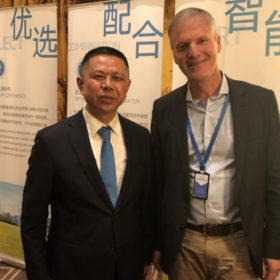
Trina Solar launches TrinaPro Integrated Solution
To mark its 20th anniversary this year, Trina Solar launched its TrinaPro integrated PV solution at a ceremony attended by Chinese and foreign participants. Trina Solar’s founder and CEO, Jifan Gao noted this important move from not only supplying top-notch PV components, such as high-efficiency cells and modules, but also supplying integrated solutions capable of further reducing PV’s already low levelized cost of energy (LCOE).
