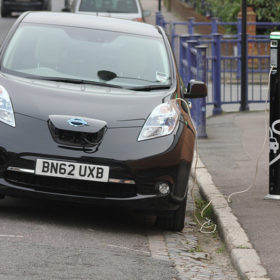
EV charging infrastructure market to reach $18 billion by 2030
EV charging infrastructure is set to become a major market, and actors from different sectors like municipal utilities, inverter companies and storage system providers are getting creative, and collaborative, in order to secure a slice of the cake.
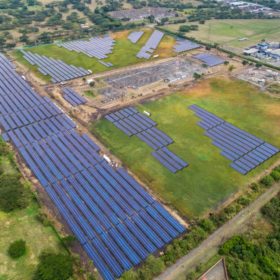
Colombia launches first RE auction
The Colombian Ministry of Mines and Energy announced that up to 1 GW of renewable energy generation capacity may be allocated. The competition will be open to solar, wind and biomass projects exceeding 10 MW in size.

Prices begin to stabilize, though falling revenues and job losses expected among Chinese manufacturers
According to reports from Energy Trend, a 30% decline in PV demand from China this year will likely spell trouble for some of the country’s major module manufacturers, with job losses and factory closures expected, despite China’s determination to open new international markets for its PV industry.

Trina to deliver PV modules to 258 MW Vietnamese project
Chinese solar PV manufacturer, Trina Solar will deliver PERC modules to the 258 MW project, located in the southern province of Ninh Tuan. With an investment of around US$220 million, the project is set to be Vietnam’s largest, when completed next June.
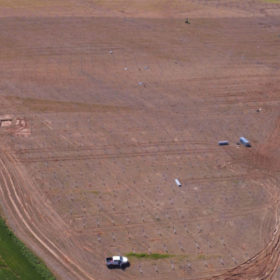
BayWa closes €100 million financing for subsidy-free Spanish PV park
BayWa r.e. renewable energy GmbH has achieved financial close on €100 million construction bridge financing for its 174 MW solar PV project in Seville.

Milestone: Over one trillion watts of wind and solar installed
A BloombergNEF analysis states that global wind and solar PV installations have reached a trillion watts, for the first time. While this milestone took the industry 40 years, the second trillion watts are expected to be installed in five years, in 2023, with the help of storage. The investment costs required to install one trillion watts are also expected to half.

Zambia seeks further financing for its 100 MW PV project pipeline
The African Development Bank is currently seeking consultants to arrange debt financing for five 20 MW projects it aims to develop under Zambia’s Renewable Energy Financing Framework.
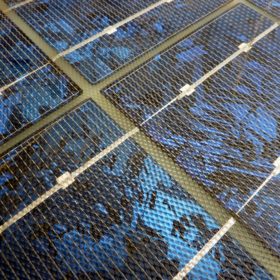
Even with duties, Chinese PV modules will be competitive in India
Despite safeguard tariffs against certain imports of solar PV products into India, Chinese manufactured modules will remain competitive, says TrendForce. It further anticipates PV demand falling 30% in fiscal year 2018 in India, while cost pressures will mount for EPCs and project developers.

German scientists observe perovskite defects, push higher cell efficiencies
A team of researchers from the Helmholtz Zentrum Berlin and University of Potsdam has been able to observe defects in a perovskite solar cell, and found that the largest efficiency losses occur at the interface between the perovskite and transport layer.
Saudi’s Zahid takes major stake in German PV company Greencells
The Zahid Group has invested an undisclosed amount in Germany-based Greencells. A key focus for the latter will now be hybrid systems in the APAC and African regions. An update on the 1.2 GW Sweihan solar project in Abu Dhabi was also given.
