
Wind has no chance against PV in Germany’s mixed wind-solar auction
32 to 0 for solar PV – that’s the result of the first technology-neutral tender. The average final price of €0.0467 per kWh was slightly above the solar-only-tender held in February.
Portugal: Renewables are driving down electricity prices
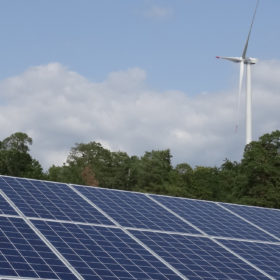
In March alone, renewable energies covered 103.6% of the country’s total power consumption, a performance which was mainly driven by wind and hydropower. As a result, the average power price on the daily spot market dropped year-on-year, from €43.94/MWh to €39.75/MWh.
Hanwha Q Cells sees net loss in 2017, despite increased shipments
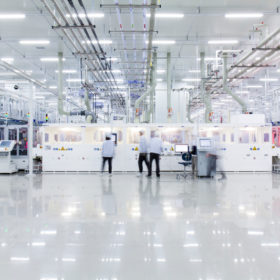
Korean module manufacturing giant, Hanwha Q Cells reported a net loss of US$9.2 million for the full year 2017, falling from a net income of $127.5 million in the previous year. The company cited a one-time loss associated with the discontinuation of wafer manufacturing as the main reason for the decline.
Global investments in small-scale solar rise 16% in Q1, one of few sectors to buck downward trend, finds BNEF
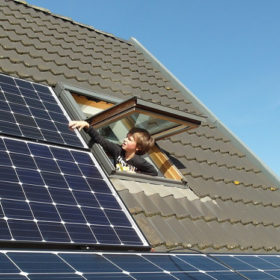
New quarterly figures from Bloomberg New Energy Finance (BNEF) show that investments in solar PV arrays of less than 1 MW hit US$14.3 billion worldwide in Q1 against 10% year-on-year contraction in global renewable investments.
Researchers in Finland develop improved aging test for perovskites
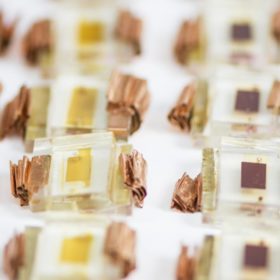
Scientists led by Aalto University in Finland have developed new ways to test perovskite and dye sensitized solar cells for aging, using fast, low threshold photography.

Copenhagen Infrastructure Partners raises €3.5 billion for renewables
The Danish investment firm will use the funds to finance wind, solar, biomass and geothermal projects across several markets. The final close of the fund exceeded its end goal by €500 million.
GCL-Poly creates JV to build new 20 GW mono ingot fab in China
The Chinese solar energy firm announces details of joint venture with the Qujing Municipal Government in China to build a 20 GW monocrystalline ingot facility in Qujing.

SolarWorld keeps shipping modules
Production is ongoing, despite the solar PV manufacturer’s recently announced insolvency proceedings. Starting this week, solar modules will be delivered to customers in France, Kuwait, Japan, Sri Lanka and Germany. SolarWorld is also seeking new investors.

EBRD helps Morocco assess its renewable energy injection capacity
The international financial institution is assisting the grid operator of the Northern African country, ONEE, in evaluating the current capacity of its very high voltage (VH) and high voltage (HV) networks to absorb additional power from renewables.
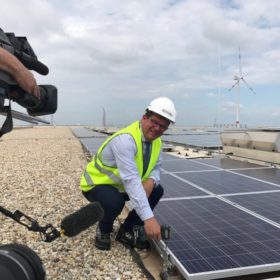
Belgium: Flemish government to improve conditions for “direct lines” for renewables
Flanders’ Ministry of Energy intends to make it easier for renewable energy suppliers to sell power to a final customer through a direct connection. This is expected to encourage industrial customers and public entities to increase consumption from clean energy sources.
