
Jamaica targets $300 million renewable energy investments
The Caribbean country is seeking to accelerate its transition to clean energies, and to benefit from funds from the Green Climate Fund. Meanwhile, the government is also seeking to improve net metering for residential and commercial PV.

Wacker says market environment for polysilicon is difficult
The German chemical company has said in its preliminary results for the first quarter of this year that polysilicon prices dropped significantly over the past weeks. Overall, the company expects to see its profits grow in 2017.
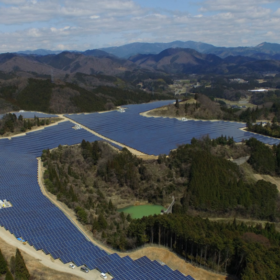
Pacifico starts building 258 MW in western Japan
The Tokyo-based developer has begun construction on what it claims will be Japan’s biggest PV project upon completion in September 2019.
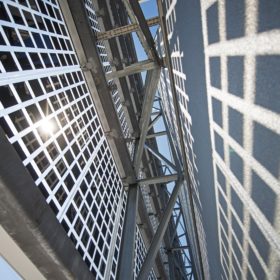
Swiss researchers develop new process for back contact cell production
A team of researchers from École polytechnique fédérale de Lausanne (EPFL) and the Swiss center for Electronics and Microtechnology (CSEM) has developed a new process for fabricating cells with all electrical contacts at the rear. According to EPFL, the process has already achieved lab efficiencies in excess of 23%.
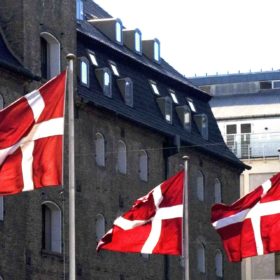
Denmark’s Energy Commission says incentives for renewables should be phased-out
A recently created Energy Commission has advised the Danish government to phase-out incentives for renewables, at the same rate as the technology becomes competitive with other energy sources. Meanwhile, Denmark has added only 3.7 MW of PV so far this year.
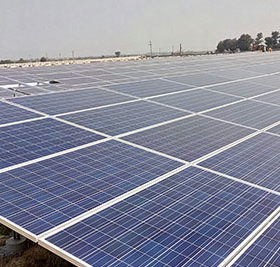
Hareon Solar, Azure Power to develop 118 MW PV project in India
The Chinese solar and PV cell manufacturer and India’s largest independent solar power company are looking to invest in a large-scale solar power project in the Indian state of Telangana.
UK energy storage: government in no hurry
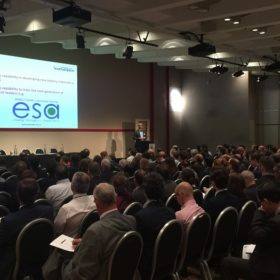
A seminar on the outlook for the U.K.’s energy storage market that took place this week in London highlighted the vibrant activity taking place in the sector, but was unable to answer when or if government can come up with a meaningful policy.
EPFL researchers investigate effect of light in perovskite cell formation
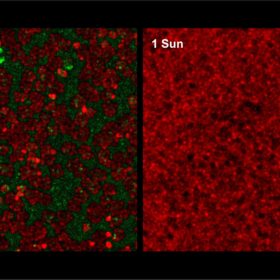
Scientists at Swiss research center École polytechnique fédérale de Lausanne have published research showing how the presence of light can affect perovskite film formation. The study could result in higher efficiencies and better reproducibility in perovskite cell production.

France announces winners of 150 MW tender round for rooftop PV projects exceeding 100 kW
The French governenment announced that 361 projects were selected in the first 150 MW round of the 1.35 GW tender for rooftop PV. The next tender round will be held in July.
German government approves draft regulation for tenants’ solar power supply
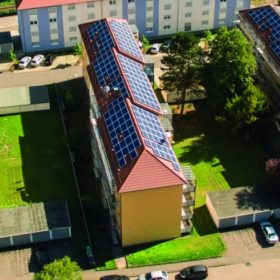
The new regulation will likely to come into force by the end of this year. The German solar association BSW has welcomed the government’s decision, although it has asked for improvements.
