
Albanian government approves 54 MW of solar projects
The government of Albania has permitted the development of two new solar plants with capacity of 30 MW and 24 MW, respectively.

Strategies for de-risking early-stage renewable energy projects
Over 70% to 90% of early-stage projects fail and are never constructed, according to findings reported by Paces.
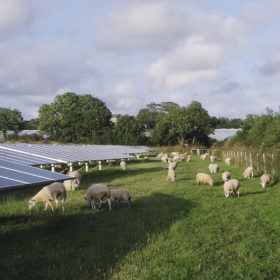
Solar grazing supports healthier soil, food for sheep, says American Solar Grazing Association
Solar sheep grazing helps to create a beneficial dual-use environment, found American Solar Grazing Association in a two-year study conducted at 31 different solar sites.

Fraunhofer develops contactless method for measuring back-contact solar cells
Scientists at the Fraunhofer Institute for Solar Energy Systems ISE have developed a contactless method to measure the performance of back-contact solar cells, enabling in-line assessment of key parameters such as efficiency, fill factor, and current-voltage characteristics.

Malaysia introduces rooftop solar aggregation scheme
Malaysia’s first rooftop aggregation initiative for solar systems is now live. The program allows homeowners to lease or rent their rooftop for solar generation, with the electricity produced sold to commercial and domestic customers within a 5 km radius.
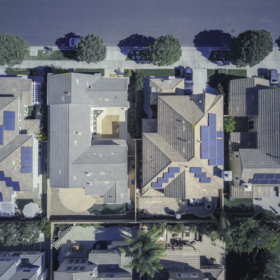
California advances bill to end net metering, break solar contracts
The California State Assembly’s Utilities and Energy Committee has passed an amended bill to end net metering for homes with solar once they are sold.
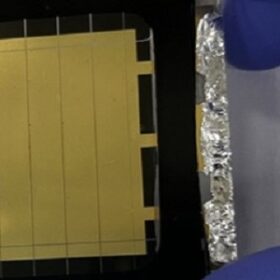
Inverted perovskite solar cell based on ionic salt achieves 26% efficiency
An international team led by the U.S. National Renewable Energy Laboratory (NREL) has used ionic salt for the electron transport layer of a perovskite solar cell to improve device stability and performance. Test results showed a 26% power conversion efficiency with 2% degradation after 2,100 hours of 1-sun operation at 65 C.
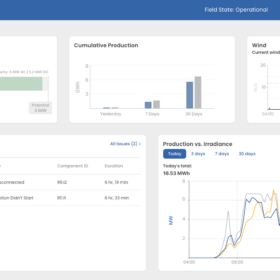
Solargik unveils platform for AI-powered solar tracking, diagnostics, control
Solargik has announced the official debut of its SOma Pro AI-powered platform for solar tracking and system diagnostics. The company says one of its main advantages is the ability to support smarter, faster decision-making.

Solar technologies at crossroads
Experts set to speak at the NetZero Milan Expo-Summit 2025 on May 15 have told pv magazine that tunnel oxide passivated contact (TOPCon) will remain the dominant cell technology in the near term due to ongoing advancements, despite rising competition from back-contact and heterojunction technologies.

Reliance Power to build 930 MW of solar with 1.86 GWh of battery storage
Reliance Nu Suntech says it will build a 930 MW solar project with 465 MW/1,860 MWh of battery storage to deliver four hours of peak power daily at a fixed tariff of INR 3.53 ($0.042)/kWh. The project aims to provide assured supply at competitive rates.
