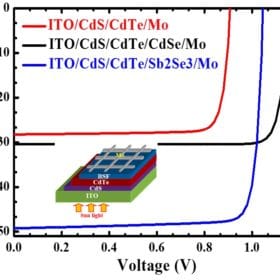
CdTe heterojunction solar cells based on antimony selenide back surface field layers
An international research group is seeking to increase the efficiency of heterojunction cadmium-telluride solar cells by applying back surface field (BSF) layers made of antimony selenide. It claims the addition of this compound may raise CdTe cell efficiency by around 9% and has the technical potential to reach efficiencies over 40%.

European Court: Renesola cells assembled into modules in India were correctly subject to EU anti dumping duty
The ruling was issued on Thursday after the matter was referred by a U.K. tax tribunal which, in March last year, upheld the U.S.-headquartered solar manufacturer’s claim the assembly of cells into panels is an important step, which should render such products Indian.

Applications open for Indian solar manufacturing incentive scheme
Companies can apply for incentives to set up gigawatt-scale solar factories in India. Applications can be submitted until June 30 and the list of successful recipients will be announced on July 26, with letters of award to be issued four days later.
India could have 2.95bn tons of solar waste by 2047
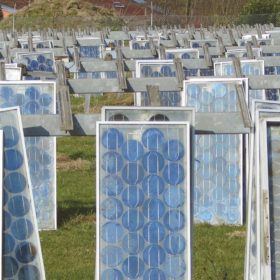
Researchers led by the Indian Institute of Technology Delhi have projected the waste expected from end-of-life solar panels and related components. They assumed 347.5 GW of total installed solar generation capacity would be reached this decade. The academics said the waste would include critical metals worth around $645 trillion, 70% of which could be recovered.
Chinese PV Industry Brief: Earthquake disrupts wafer production in Yunnan and Qinghai
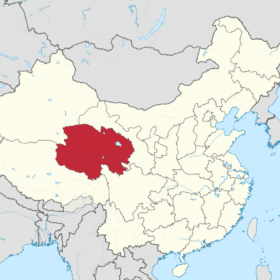
Solar manufacturers Longi and Zhonghuan Semiconductor have reported output at their factories in the two provinces has been reduced by earthquakes that happened on Friday night and before dawn on Saturday. Elsewhere, module maker Jolywood has announced the signing of an agreement with the city government of Taiyuan, in Shanxi province, to build a TOPCon solar cell fab with a 16 GW production capacity.
Minister highlights Bangladesh’s lack of land for solar
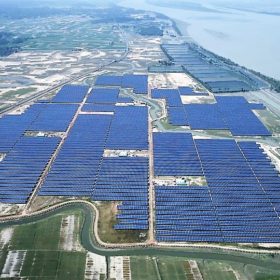
Junior power minister Nasrul Hamid, speaking at a signing ceremony for a planned 100 MW project, warned technology would have to develop to require less surface area for solar modules, although he did say Dhaka would fund research into rooftop solar.

Hanwha Q Cells unveils 495 W solar panel with 21.4% efficiency
The Q.Peak Duo XL-G10.3 panel is currently the largest and most powerful product manufactured by the South Korean module maker. It is based on 156 monocrystalline ‘Q.antum’ half cells and is the company’s first panel relying on M6 wafers.

GCL shareholders to vote on further 670 MW of project sales
Shareholders will vote on whether to approve the sale of ten solar farms to generate $320 million towards paying down its heavy debt pile.
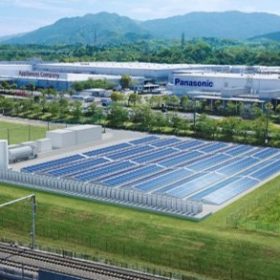
Panasonic combines hydrogen fuel cell generators with PV and storage
The pilot project is combining hydrogen fuel cell generators with a combined capacity of 500 kW with a 570 kW solar array and 1.1 MWh of lithium-ion batteries. It is planned to come online in the spring of 2022.
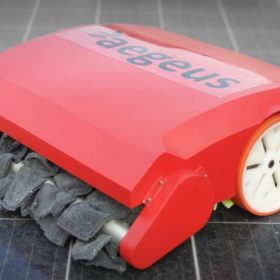
Water-free, portable cleaning bot for rooftop solar
India’s Aegeus Technologies has developed an autonomous, water-free cleaning bot for rooftop solar installations. The bot weighs 5 kg (with battery) and can be operated remotely through a web-based app. It uses an air wash technology to clean the panels, ensuring no need for water or any harmful chemicals.
