
Tandem solar cell based on cadmium telluride, iron disilicide promises 43.9% efficiency
Researchers in Bangladesh have designed a dual-junction tandem solar cell with a bottom device based on iron disilicide (FeSi2), an emerging absorber material know for its high thermal stability and good optoelectronic properties. Their simulation showed the advantage of combining the larger bandgap of the top cadmium telluride cell and the smaller bandgap of the bottom FeSi2 cell.
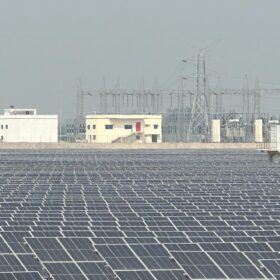
Bangladeshi utility completes 75 MW solar project
The Electricity Generation Company of Bangladesh (EGCB), backed by the World Bank and the Bangladeshi government, has finished building a 75 MW solar project in southeastern Bangladesh.
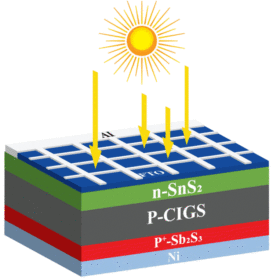
New CIGS solar cell design with antimony trisulfide promises 31.15% efficiency
The novel solar cell uses antimony trisulfide (Sb2S3) as the back surface field (BSF) layer. According to its creators, this layer can be included in conventional CIGS solar cells to improve their efficiency and reduce the absorber material’s cost.
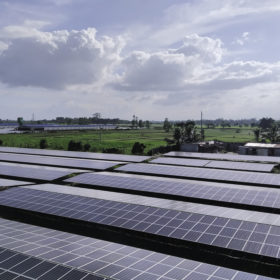
Bangladesh’s solar project approvals hit 2.1 GW in 2023
In December alone, the Bangladeshi authorities approved 630 MW of PV projects.
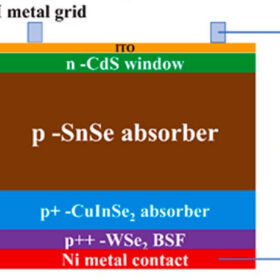
Novel tin selenide solar cell design promises 36.45% efficiency
Tin selenide solar cells have so far reached limited efficiencies in real applications. Bangladeshi scientists claim to have found a way to drastically improve their performance by adding a copper/indium/selenium (CIS) thin-film layer and a back surface field (BSF) layer.
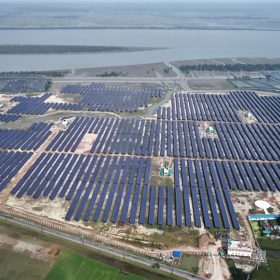
Bangladesh approves 1.5 GW of solar
Bangladesh has approved more than 1.5 GW of solar projects over the past seven months, with recent developments including tariffs for 200 MW in November and 310 MW in October.
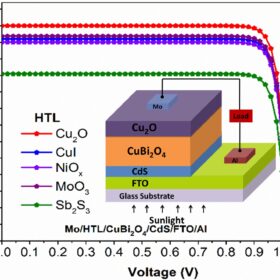
Novel architecture for heterojunction copper bismuth oxide solar cells
Researchers in Bangladesh have simulated a solar cell based on a copper bismuth oxide material, used as an absorber, with a hole transport layer made of copper(I) oxide (Cu2O). In the experiment, the device achieved a power conversion efficiency of 29.2%, an open-circuit voltage of 1.02 V, a short-circuit current density of 32.49 mA/cm2, and a fill factor of 87.91%.
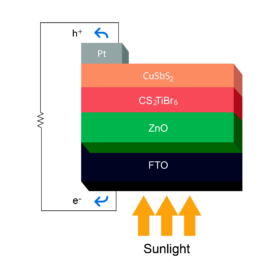
New lead-free perovskite solar cell design promises 26.96% efficiency
Bangladeshi scientists have developed a high-efficiency perovskite solar cell with 26.96% efficiency, an open-circuit voltage of 1.0478 V, and a fill factor of 81.35%.
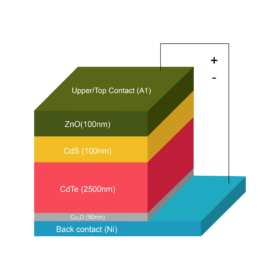
Novel cadmium telluride solar cell design with potential efficiency of 31.82%
Scientists in Bangladesh designed a cadmium telluride solar cell with upper/top and back contact materials made of aluminum (Al) and nickel (Ni). The device reportedly showed a quantum efficiency of around 100 % at visible wavelengths.
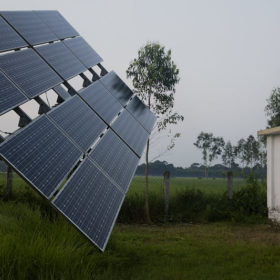
Bangladesh introduces rooftop PV requirement for big, new buildings
Bangladesh has implemented a new rule stating that new buildings with rooftop spaces exceeding 92.2 square meters must install net-metered solar power systems as a prerequisite for grid connection.
