The Hydrogen Stream: EU hydrogen tender ends with bids below €0.50/kg
The European Commission has selected the winners of European Hydrogen Bank’s first auction, with bids coming in below €0.50 ($0.54)/kg, while Chile and Namibia have revealed new hydrogen plans.
Development toolbox – from site selection to design of large-scale PV plant projects
To investigate how developers can use software to smooth out pain points in their workflow, pv magazine will be joined by experts from PVcase to hear about how developers are using the PVcase Integrated Product Suite to ease processes: from site selection to design and on to yield estimates.
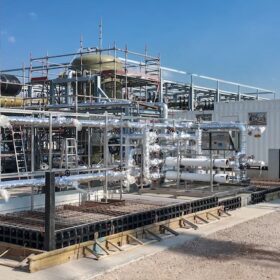
The Hydrogen Stream: Linde plans 5 MW electrolyzer in Brazil
Linde says its White Martins unit will build a second electrolyzer to produce green hydrogen in Brazil, while Sunfire has launched a front-end engineering and design study (FEED) for a new 500 MW hydrogen project.
Stellantis acquires 49.5% stake in Argentine solar company
Car manufacturer Stellantis has agreed to invest $100 million in a 49.5% stake in Argentina’s 360 Energy Solar. The two parties plan to develop new solar plants, install large-scale storage systems, and produce hydrogen energy.

Brazil’s January-March solar deployments hit 4 GW
Brazil’s cumulative installed PV capacity exceeded 41 GW at the end of March, with utility-scale plants accounting for 13 GW and distributed-generation resources representing 28 GW of the total.
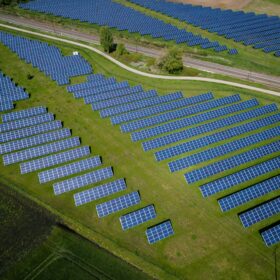
IRENA says solar capacity rose by 345.5 GW in 2023
The International Renewable Energy Agency (IRENA) says developers installed 345.5 GW of solar throughout the world in 2023. China mainly drove the surge, accounting for nearly three-quarters of all new renewable energy, but IRENA says more equitable growth will be needed to hit 2030 deployment targets.
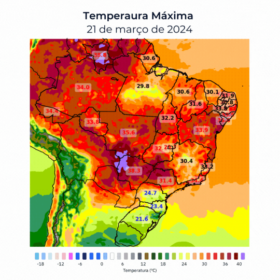
Heat wave affects solar power generation in Brazil
A heat wave drove Brazil’s power demand up to a record high of 102 GW last week. However, it also affected solar power generation and pushed PV module operating temperatures to up to 60 C.
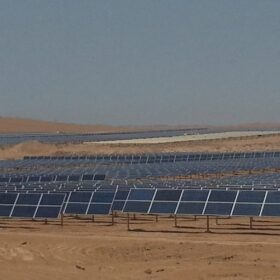
Solarpack closes financing on 300 MW of solar under PPA in Peru
Solarpack has closed financing for a 300 MW solar project in Peru, marking the country’s first solar farm to sell power through a bilateral power purchase agreement (PPA).
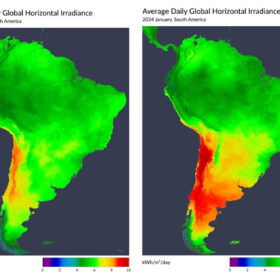
Dry Amazon delivers sunny start to 2024 for South America
In a new weekly update for pv magazine, Solcast, a DNV company, reports that Chile, Uruguay and Argentina saw irradiance up 5% to 15% above normal in January and February. Responsible for the surplus sunlight across South America was the ongoing Amazon drought, and circulation changes that pushed weather fronts further south of the continent than usual.
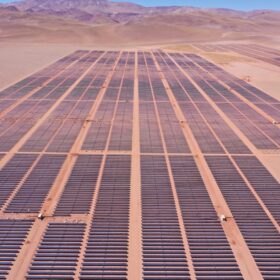
PV and prices, the (not so fast) uptake of solar in Argentina and Chile
The Atacama Desert in Argentina and Chile is the sunniest region on earth. Despite the excellent solar radiation resource availability and plenty of room on rooftops and on the ground, solar PV is not as widespread in either country as would have been expected based on the initial deployment of large-scale PV power plants in both countries some ten years ago.
