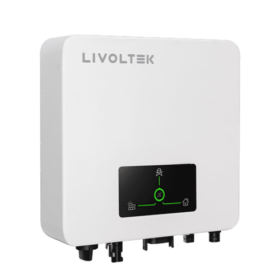
Livoltek to build 1.8 GW inverter factory in Brazil
Livoltek plans to build a 1.8 GW inverter factory in Manaus, northern Brazil. It says the facility will manufacture single-phase and three-phase devices.

Brazil could produce green hydrogen for $2.87/kg, says consultancy
Sao Paulo-based Clean Energy Latin America says green hydrogen could be produced in Brazil at a levelized cost of hydrogen (LCoH) of $2.87 and $3.56 per kg in some strategic locations.
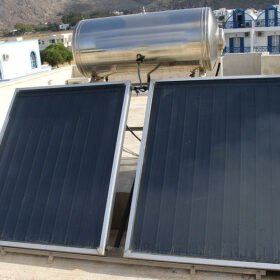
Heat pump design to reduce footprint of solar thermal installations
A US-Mexican research team has investigated how linking heat pumps with solar thermal collectors may help reduce the surface needed to deploy the collectors themselves. The scientists found the proposed solution may not only significantly reduce the footprint of solar thermal systems but also provide a lower levelized cost of energy compared to fossil fuels.
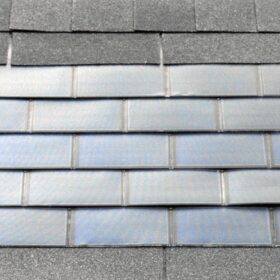
IEA-PVPS releases guide for applying innovation system approach to BIPV
IEA-PVPS has published a new handbook that provides support for Technological Innovation System (TIS) analysis for building-integrated photovoltaics (BIPV).

The Hydrogen Stream: North African hydrogen development stokes concerns
French researchers have identified a number of potential social issues that may arise as North Africa develops its significant hydrogen potential, while the European Commission has released the details of its pilot auction for European renewable hydrogen production.

BayWa re to acquire Brazilian PV distributor Ribeiro Solar
BayWa re has agreed to acquire Ribeiro Solar, a Brazilian PV distributor headquartered in Curitiba, Paraná. The company also operates distribution centers in Paraná, Rio Grande do Sul, and Pernambuco.
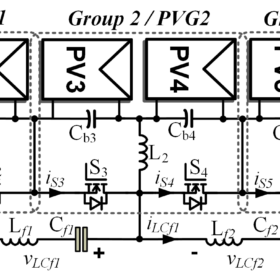
New DPP converter to improve yield in PV systems under permanent mismatch
Brazilian scientists have created a new hybrid converter topology based on differential power processing (DPP) that can help reduce power losses in PV systems under permanent mismatch conditions, as well as temporary ones caused by partial shading, dirt and snow. The converter consists of a hybrid topology that combines the PV-to-PV and PV-to-Bus architectures and reportedly solve some of the issues presented by both configurations.
BESS diagnostics for holistic lifecycle management
In this pv magazine webinar, we will hear about what needs to be considered to ensure safer and longer-lived battery energy storage systems (BESS), as well as learn how monitoring can help in anomaly detection and improved utilization.
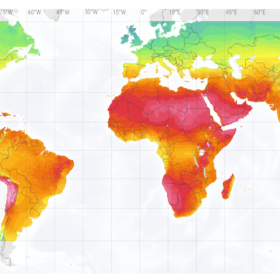
New study claims PV industry is neglecting overirradiance issues
Overirradiance conditions may affect the operating performance of photovoltaic plants, the stability of the electrical grid, and the efficiency of inverters. A research team has warned these effects are currently not being given proper consideration by the solar industry.
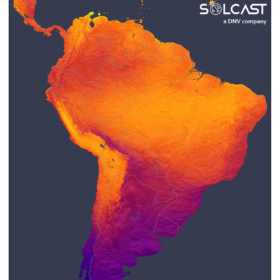
July’s irradiance up in most of South America, down east of the Andes
In a new weekly update for pv magazine, Solcast, a DNV company, presents the solar irradiance data it collected for South America in July. The data show that South America experienced temperatures up to 15 C above winter averages, and that most of the continent saw higher than normal radiation. The Chilean Andine, especially Altiplano in the Atacama Desert, which has recorded the highest incidence of irradiance in the world, recorded values 10% above normal.
