
Covid-19 weekly briefing: Merchant solar developers could seek shelter in return to subsidies and PPAs are being revisited, but at least the Irish are coping with lockdown measures
The unfolding effects of the Covid-19 crisis, and fears of a possible second wave, have split analysts trying to guess how the unsubsidized renewables market will emerge as slumping demand continued to distort power markets. pv magazine rounds up the week’s coronavirus developments.

Brazil hits 5 GW milestone
In Brazil, like in many other parts of the world, industry associations claim that solar will be a strategic element in the recovery from the Covid-19 crisis, due to its potential to create jobs, generate income, and attract new investment.
Amerisolar plans new 200 MW solar panel factory in Brazil
Chinese manufacturer Amerisolar and Brazilian energy company Nova Renováveis are planning to set up a 200 MW solar module manufacturing facility in Belo Horizonte, in the Minas Gerais state.
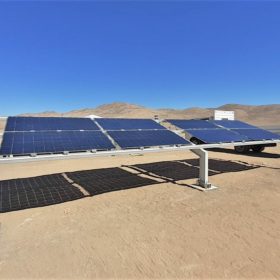
Bifacial panel made in Chile
Atamostec, a private-public initiative supported by Chile’s government-run Production Development Corp. and several industrial partners, has developed a new module. The team claims that the bifacial panel offers an additional annual average gain of 11% compared to monofacial PERC modules with the same cell technology.

Covid-19 weekly briefing: A cold wind for APAC renewables, respite for Indian developers and another salary cut for SunPower execs
The coronavirus epidemic continues to batter the global economy, including the solar industry, but falling demand during lockdowns has brought negative energy prices as well as helping drive record solar generation, amid less-polluted skies.
Nextracker the largest tracker provider in 2019
The ten largest solar tracker companies accounted for 88% of the market last year, according to analyst WoodMackenzie, with the market growing 20% from 2018.
Fifteen-year PPA for 200 MW of PV in Mexico
Portuguese energy group EDP has secured a long-term power purchase agreement for its 200 MW Los Cuervos solar plant in the Mexican state of Aguascalientes. Local offtaker Ammper has agreed to buy the electricity.

Renewables and geopolitics: Who will ‘win’ the energy transition?
The losers in a world which no longer runs on fossil fuels are obvious but the dividend from shrugging off hydrocarbon dependency will be spread around most of the world so it is the nations which are winning the cleantech manufacturing and intellectual property race which appear best positioned for the future.

Colombia’s 9.48 GW solar project pipeline
The technology makes up almost 70% of planned clean energy generation capacity in a nation which added just 4 MW of solar last year.
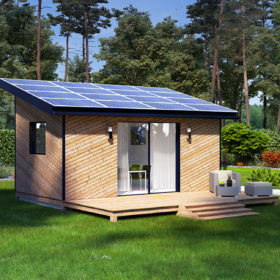
A wooden solar house for €1,700 per square meter
French start-up Solaire Box has raised €1.5 million to back its business supplying wooden houses complete with PV rooftops. The buildings cost €1,700-2,000/m² and feature PV modules made by French firm Systovi. The company plans add to add features such as energy storage systems and carbon-free heating.
