
Trade body expects China to add 90 GW of solar this year
Solar developer Beijing Energy reported a bumper prediction apparently made by the China Electricity Council, as the developer published its annual figures today.

Polysilicon giant planning more production capacity
Newly rebranded GCL Technology is laying plans to invest more than $1 billion into its output capability, as its latest set of quarterly figures again spelled out just how profitable the business is at the moment.

Polysilicon maker predicts 5-year shortage of solar raw material
TBEA-owned Xinte Energy says it cannot produce polysilicon quickly enough to meet demand and wants shareholders to back its bid to quadruple its manufacturing capacity by mid 2024.
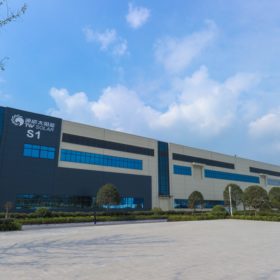
Chinese PV Industry Brief: Hoshine expands PV glass output, Tongwei raises cell prices
Hoshine plans to expand PV glass production, while Tongwei is raising PV cell prices, with a particular focus on monocrystalline cells. Maxwell Technology has secured a 4.8 GW production line order from India’s Reliance Industries, while JA Solar has reported a net profit increase of 35% for 2021.
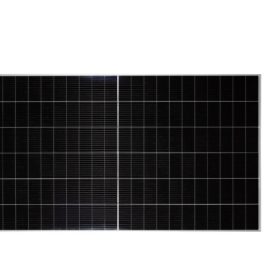
Eging releases 685 W TOPCon PV module with 22.05% efficiency
Chinese manufacturer Eging has unveiled a new line of bifacial TOPCon solar panels based on n-type wafers and 210 mm cells. The modules have a temperature coefficient of 0.31% and efficiencies ranging from 21.24% to 22.05%.
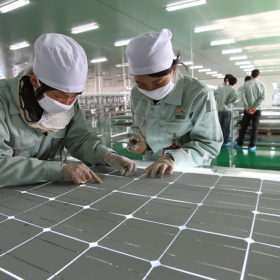
AI method learns from experienced staff on perovskite solar production lines
Academics from MIT and Stanford who have posited a new production method for perovskite solar cells have also developed a machine learning system which benefits from the experience of seasoned workers – and they’ve posted it online for anyone to use.
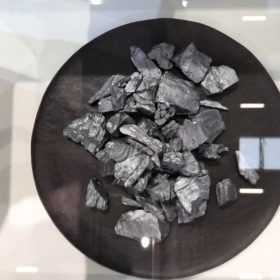
Chinese PV Industry Brief: Polysilicon prices keep rising
The cost of solar panel raw material polysilicon topped $40/kg this week, according to the China Nonferrous Metals Association, continuing a three-month upward trend.

Molecular thermal energy system can store solar energy for 18 years
Developed by a Chinese-Swedish research group, the device is an ultra-thin chip that could be integrated into electronics such as headphones, smartwatches and telephones. It combines a Molecular Solar Thermal Energy Storage System (MOST) with a micro-fabricated system that includes a thermoelectric generator (TEG) with a low-dimensional material-based microelectromechanical system (MEMS).
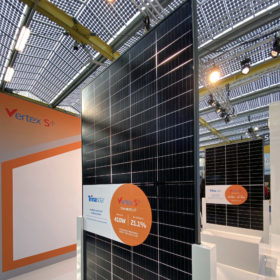
Trina Solar brings 425 W rooftop PV module to Europe, with 21.9% efficiency
China’s Trina Solar is bringing a new 425 W solar panel to the European market, following an Australian market launch in March. The panel relies on the company’s n-type PACO Cell technology, 210 mm diameter wafers, multi-busbar design, non-destructive cutting, and high-density packing.
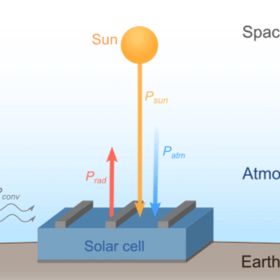
Radiative cooling for PV modules – challenges and prospects
A group of international scientists has investigated the potential use of radiative cooling in PV systems, in a newly published review focusing on challenges and opportunities for the passive cooling technology.
