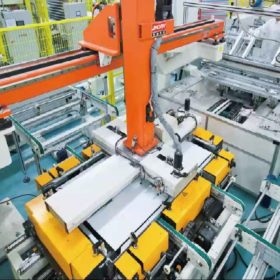
Talesun: Focus on solar tech and product innovation to survive
Several black swans have been circling over this year’s solar PV industry: rising raw material and product prices; supply chain issues and international logistics holdups; and power shortages in China, to name but the most disruptive. How is it possible for solar companies to survive under these conditions? According to Dong Shuguang, a PV veteran and President of Talesun Solar, they must focus on solar technologies like PERC, TOPCon and HJT, and product innovations that provide customer value.
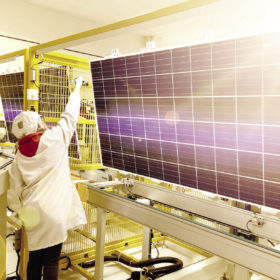
Canadian Solar prepares to rein in production capacity expansion plans
While the Sino-Canadian business expects high polysilicon and shipping costs to be a temporary problem, CEO Shawn Qu has acknowledged the company will have overcapacity in cell and wafer production lines by the end of the year.

Soluna unveils 20kWh battery for residential and commercial applications
The Chinese manufacturer says the battery has a depth of discharge of 95%. It will be available for sale starting from Q1 2022.
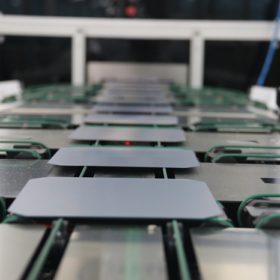
Chinese PV Industry Brief: Shuangliang secures another major wafer supply deal
The Chint group has also agreed to sell a portfolio of distributed solar projects with a capacity of 493 MW.
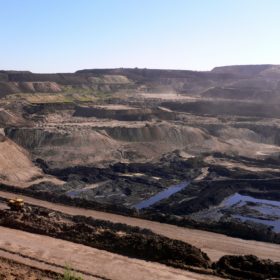
How to convert coal mine goaves into pumped hydro storage facilities
According to Chinese researchers, using abandoned coal mine goaves for pumped hydro facilities in combination with large scale solar and wind is not only technically feasible but can also provide an efficiency of 82.8% in yearly operation cases. They applied the model to wind and solar-rich northwestern and southwestern China.
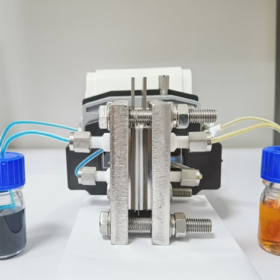
Redox flow battery with capacity retention of 99.98% per cycle
The battery was fabricated by Chinese scientists with a low-cost electrolyte made of a derivative of TEMPO, which is a well-known electroactive aminoxyl radical used with several applications in chemistry and biochemistry. According to the researchers, the battery shows high redox potential and is crossover-free.

Chinese PV Industry Brief: Longi considers overseas factory, GCL-Poly switches on 20,000 MT polysilicon fab
Furthermore, DaSolar has unveiled a plan to build a 5 GW module factory in Fujian and Maxwell Technology said it will provide a 500 MW heterojunction solar cell production line to Anhui Huasun New Energy.

Analyst revises up zero-emission vehicle forecast after bumper year
A report published by BloombergNEF for the COP26 climate change summit has listed global commitments by cities, states, provinces and nations to end the sale of new fossil-fueled vehicles but, with 2035 estimated as the cut-off date for zero-emission roads by mid century, policymakers need to be more ambitious.
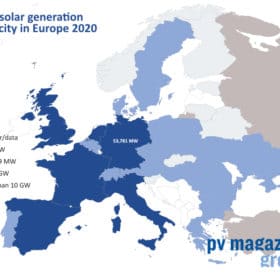
The state of EU renewables – Solar cell plans encouraging but heat pump market could go the same way as European PV did
The European Commission has published its second annual assessment of the competitiveness of the EU’s renewable energy technology industries, and it had a warning for policymakers about the trade balance trend being experienced by heat pump makers.
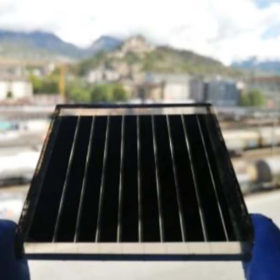
Isomer passivation for a 21.4% efficient perovskite module
An international team of scientists trialled a new approach to passivating defects in perovskite solar cells. Using a tailored arrangement of atoms, the team was able to overcome challenges related to the formation of a two-dimensional perovskite layer on top of the active cell material, and reach 21.4% conversion efficiency for a 26cm² active area, which they claim as a record for a perovskite device of this size.
