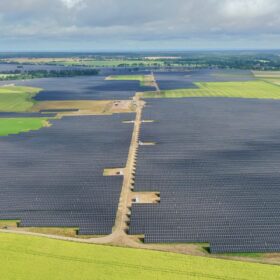
First PV plant operating in Poland’s balancing market
The 204 MW Zwartowo solar power plant is the first large-scale solar project authorized to provide balancing services in Poland.
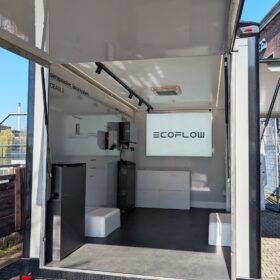
A closer look at EcoFlow’s three-phase Ocean 2 storage solution
Ocean 2 brings a more versatile large-scale and expandable, modular home storage solution, capable of handling both small and large solar PV input.
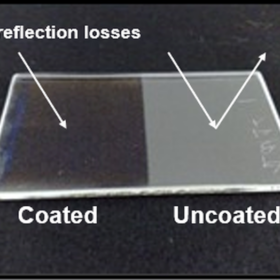
Porous silica-based anti-reflective coating increases PV glass optical transmission by 5.2%
Researchers in Spain developed a porous silica anti-reflective coating for solar panels that boosts optical transmission while balancing durability and mechanical stability through optimized sol–gel chemistry.
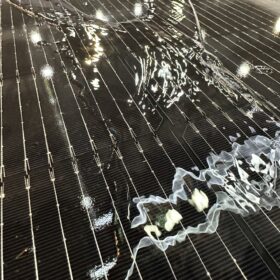
Internet-of-Things could bring solar module water cooling closer to commercial viability
A Czech team developed an IoT system using MQTT to autonomously cool PV panels, boosting daily energy yield by 7.38% with a positive net energy balance.

Utility-scale sodium-ion arrives in Romania
Renalfa Power Clusters plans to combine newly acquired solar and battery assets in Romania into a hybrid project using lithium-ion and sodium-ion storage.
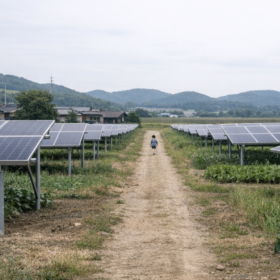
Croatia tenders 56 MW solar-storage project
Croatian power company Hrvatska Elektroprivreda is seeking a developer to build a 56 MW solar power plant tied to up to 200 MWh of battery energy storage. The deadline to submit expressions of interest is May 12.

‘Photovoltaics are, first and foremost, about energy security’
In an interview with pv magazine, Carolina Novac, Secretary of State at Moldova’s Ministry of Energy explains how the country raised its solar capacity to 1 GW while advancing wind, storage, and regulatory reforms to strengthen energy security and reach 30% renewables by 2030. The Moldovan government is now focusing on scaling BESS, modernizing the power market, and enhancing cybersecurity through stronger policies and international cooperation.
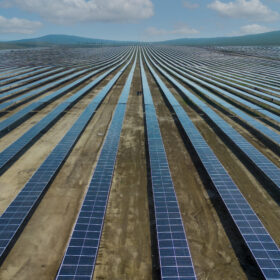
TotalEnergies, Masdar to merge renewables activities in nine Asian countries
The two major developers plan to establish a joint venture company with equal ownership that will be their sole vehicle for building, owning and operating both existing and future solar, storage and wind projects across nine Asian countries.
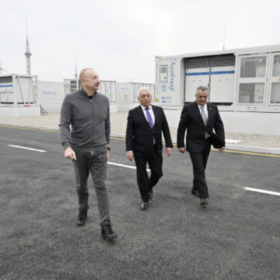
Azerbaijan commissions 500 MWh battery storage project
Azerbaijan President Ilham Aliyev has inaugurated a major battery energy storage system (BESS) project as part of a 500 MWh rollout to strengthen grid stability and support renewable energy integration.

Lithuania’s solar capacity surpasses 3 GW
Lithuania added approximately 600 MW of solar last year, taking total capacity to 3,040 MW. Technical permits have been issued for an additional 4 GW of solar but with grid congestion becoming a primary constraint, future deployments will be increasingly dependent on integration with storage technologies.
