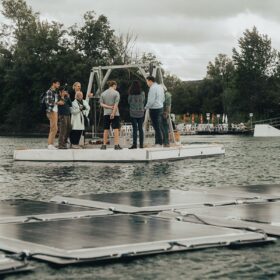
Floating PV for waterparks
Prefabricated floating solar PV provider Sunlit Sea, based in Norway, has provided its floaters for a 60 kW floating array installed at a waterpark in Germany.

Romania resumes development of 1 GW pumped hydropower project
Romania is resuming the development of the Tarniţa Lăpuşteşti pumped hydro storage project, with a planned capacity of 500 MW to 1 GW. It will be the first installation of its kind in the country.
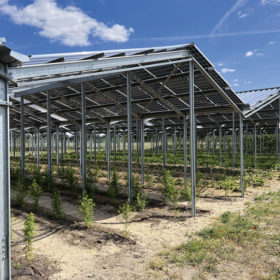
Croatia adopts legal framework for agrivoltaics
The Croatian government has adopted bylaws to the Spatial Planning Act that define agrivoltaic installations and the areas in which they can be deployed, in order to facilitate future deployment.
Is the EU doing enough to establish a solar manufacturing supply chain?
Compared to the Inflation Reduction Act (IRA) signed by Joe Biden’s administration in the US, the EU’s approach to establishing solar manufacturing appears slow and lacking in clarity. In this blog post, I will explore the EU’s renewable energy policy, specifically its emphasis on solar manufacturing, and evaluate whether Brussels is doing enough to establish a European solar supply chain.
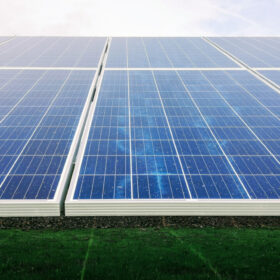
UK developer buys Bulgaria’s largest PV project
Rezolv Energy, a UK developer, has bought Bulgaria’s largest PV project. The company plans to start building the 227 MW PV facility by the end of this year. It will sell power to unspecified clients under power purchase agreements.

Slovenia to deploy solar plants along highways
Soške Elektrarne Nova Gorica is working with Slovenia highway operator Dars to build several PV arrays along Slovenia’s biggest motorway.

PVcase raises $100 million to fuel expansion
PVcase, a Lithuania-based solar project software company, raised $100 million to expand the market for its platform and extend its capability.
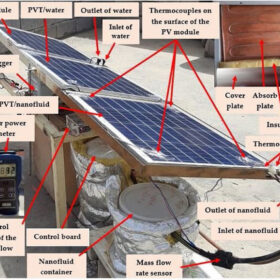
Experimental photovoltaic-thermal system based on zirconium oxide nanofluid
An international research group has designed a new photovoltaic-thermal module configuration that uses zirconium oxide as a cooling agent. The system is reportedly more efficient than water-cooled counterparts in reducing its operating temperature.
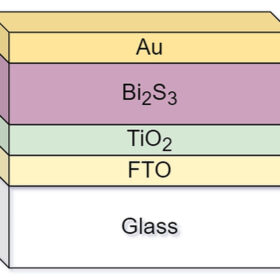
Novel approach to build bismuth trisulfide thin-film solar cells
Researchers in Estonia applied for the first time the close-spaced sublimation (CSS) deposition technique to manufacture solar cells based on bismuth trisulfide (Sb2S3). The resulting devices showed limited power conversion efficiency so far, but the scientists claim the new process paves the way for the development of future earth-abundant inorganic PV materials.
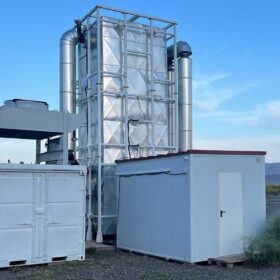
Thermal energy storage system based on recycled ceramics
Serbia-based Storenergy has developed a thermal energy storage (TES) solution that uses recycled ceramics as the storage medium. It says its solid-state storage solution is designed to ensure long lifespans and low maintenance costs.
