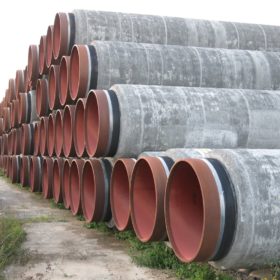
European energy without Russian gas
Scientists in Denmark have modeled the likely impacts of reduced gas supply on the European energy mix up to 2050. Their research finds that if the continent is to achieve the Paris Agreement goal of limiting global average temperature increase to 1.5 C, then gas consumption would need to be heavily reduced, anyway. In less ambitious climate scenarios, however, limited gas supplies could delay the phase-out of coal-fired electricity and lead to longer-term uncertainty over fuel and electricity prices.

High-voltage sodium-ion batteries with up to 15% higher energy density
Researchers in Russia have developed a new sodium-vanadium phosphate fluoride powder. It has a particular crystal structure that provides superior energy storage capacity in the battery cathode.

The Hydrogen Stream: $8 billion green hydrogen facility near the Suez Canal
Egypt is taking several steps to support renewable and hydrogen projects, aiming to produce 42% of its electricity from renewable sources by 2030. Meanwhile, a team of researchers led by UCLA developed a method for predicting platinum alloys’ potency and stability; Iberdrola and bp are working on strategic collaboration, including large-scale green hydrogen production hubs in Spain, Portugal and the UK.
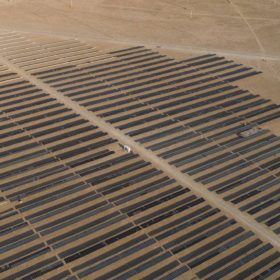
Uzbekistan is steaming ahead in the race to carbon neutrality
The war in Ukraine continues to disrupt the global energy sector and, combined with the recent heatwaves affecting Europe, the need to restructure economies is starker than ever. Luckily, there are some countries that have kept working on their energy transition reforms and taking tangible actions towards tackling climate change. Uzbekistan is one of them.
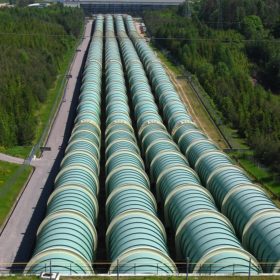
Polish utility PGE wants to couple 200 MW/820 MWh of battery storage with existing pumped-hydro facility
The project is located 10 km from the Baltic Sea, where PGE is planning to build offshore wind farms with a total capacity of 3.5 GW.
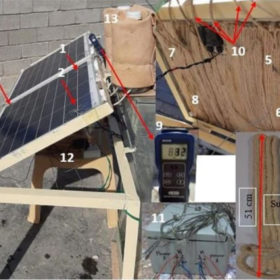
Cooling down solar modules with cotton wicks immersed in water
The novel technique consists of attaching cotton wicks immersed in the water (CWIWs) to the backside photovoltaic module. The water is supplied to cotton wicks from top to bottom by gravity which the scientists said helps the effective absorption of cotton and reduces water consumption.

New kind of black silicon shows improved light-trapping properties
Scientists in Russia have developed a new wide-band optical absorber called ‘black silicide’ which they claim is more adjusted to match AM-1.5 solar spectrum with theoretically higher photogenerated current density. It could be used for tandem operation in photovoltaic devices.
North Macedonia improves regulatory framework for rooftop PV
The Macedonian government increased the size limit for PV installations under net metering, launched a €1 million rebate scheme, and is now planning to eliminate all grid fees for prosumers.
The right tilt angle, inverter sizing, row spacing for optimal yield forecast
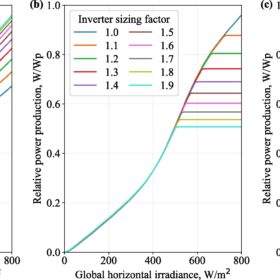
Researchers in Hungary have found that a high tilt angle may increase power forecast errors in a PV installation by up to 49%. They also ascertained that
undersizing the inverters by a sizing factor of 1.5 may reduce forecast errors by up to 25%.

New photovoltaic tiles from Estonia
Estonian startup Solarstone has developed two solar tiles with an efficiency of up to 19.5% and an operating temperature coefficient of -0.41% per C. It recently secured €10 million in funds to expand sales across Europe.
