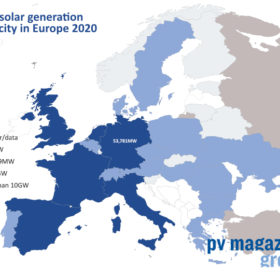
Solar the fastest growing European clean power source
The latest numbers released by EU data body Eurostat indicate renewables, including hydropower, contributed 37% of Europe’s gross electricity consumption in 2020, up from 34% a year earlier.
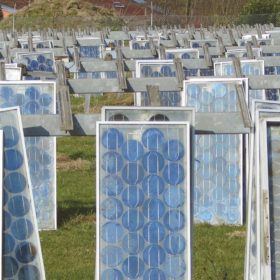
European Court of Justice: Solar manufacturers not liable for waste costs for panels shipped to EU before Aug. 2012
A preliminary ruling by the European Court of Justice states panel makers should not be responsible for electrical waste management costs in a seven-year period as the rules in place before the EU’s WEEE directive entered force, in 2012, permitted member states to place the obligation on panel users instead. The resulting change in law, in some states, cannot be applied retroactively, under EU legal rules.
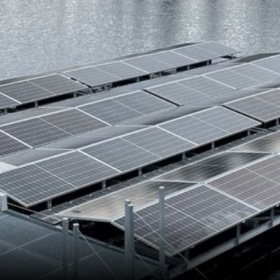
Czechia’s first floating photovoltaic plant
Operated by Czech utility CEZ Group, the pilot solar plant will be located at different heights during the charge and recharge cycles of a pumped-hydro plant and the difference in height may reach up to nine meters.
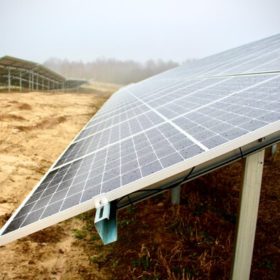
Unsubsidized solar projects proliferate in Poland
Four new PV developments have been announced this week, adding to a growing list of renewable energy projects in the coal-dependent Eastern European country.
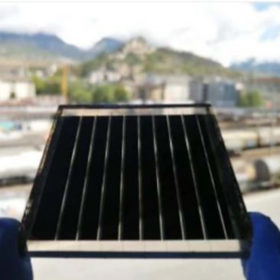
Perovskite solar module with 21.36% efficiency via new passivation tech
Lithuanian scientists built the panel with 23.9% efficient solar cells with operational stability of over 1000 h. The module has an active area of 26 cm2.
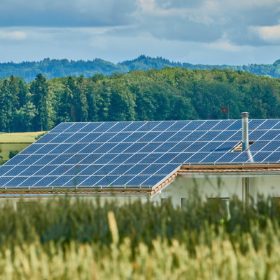
Romania authorizes bilateral PPAs, raises size limit for solar under net metering to 400kW
With Emergency Ordinance no. 143/2021, the Romanian government has restored legal certainty for bilateral power purchase agreements and has created more favorable conditions for solar power generators under net metering regime.
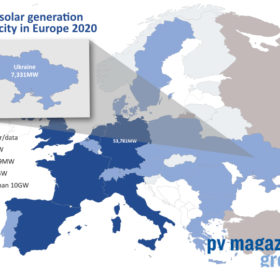
‘Ukrainian gas – and renewables – can offer Europe energy security’
While the chief executive of Ukraine’s biggest private energy company scrupulously mentioned the role renewables could play in counteracting the Nord Stream 2 gas pipeline, he called for his country’s gas market to be liberalized just as the European Commission appears set to rubber stamp gas as ‘sustainable.’

Uzbekistan launches tender for 300 MW solar park
The Uzbek authorities have said that the 300 MW Guzar Solar PV project will be built in the Guzar district of Uzbekistan’s Kashkadarya region.
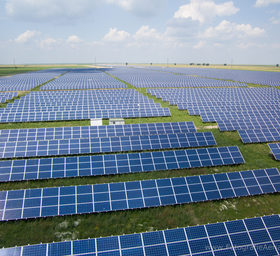
Romania to hold first renewables tender in H1 2022
Romania will likely allocate several gigawatts of solar power through a range of procurement exercises over the next four years. According to the Romanian Photovoltaic Industry Association, there are currently between 20 GW and 30 GW of large-scale renewable energy projects in various stages of development, with several hundred megawatts potentially set to go online this year.

Heat-protective film to reduce solar module temperature by 3.5 degrees Celsius
An international research team has tested a holographic film based on prismatic concentrators that was presented by Russian scientists last year and is claimed to significantly reduce the operating temperature of solar modules, including that of thermal-photovoltaic devices. According to the new findings, the film is able to lower the operating temperature by around 3.5 degrees Celsius.
