Hungarian utility concludes own 300 MW PV auction
Power company MVM will add new generation capacity to the 100 MW of solar it already operates in its homeland.
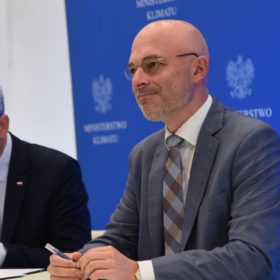
Polish solar manufacturers unite to compete with imports
Businesses, supported by the government, will join forces to strengthen their industry and contribute to the European Green Deal through made-in-EU products.

Bulgaria wants another 2.6 GW of renewables by 2030 – and coal
The government’s energy strategy targets new clean energy capacity this decade but all existing coal power plants will also remain active, gas pipelines could be upgraded and new nuclear facilities deployed.

Leclanché restructure delayed
Eneris Group has suspended its financial commitments for the time being and Leclanche shareholder Fefam has provided a bridge loan of CHF34 million to give the historic company more time to set up a joint venture for large scale battery cell production in Europe.

Rising number of grid-connection permits shows 2020 could be another record year for Polish solar
Data from the Instytut Energetyki Odnawialnej shows 1.3 GW of solar projects secured preliminary grid-connection permits in the first half, with around 600 MW securing final approval. Last year, preliminary approvals totaled around 2 GW and final awards 730 MW.
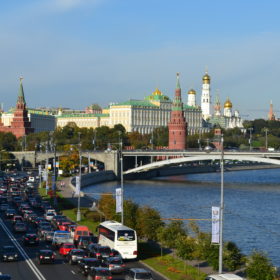
Renewables and the Russian economy
As nations begin to move towards clean energy, fossil fuel exporting countries will need to rethink and reshape their economies. Taking Russia as an example, an MIT study has examined the likely impact on oil, gas and coal exports and the opportunities the energy transition could offer.

Will a watered down EU Just Transition Fund still be effective?
The EU Council has rejected a Covid-inspired European Commission proposal for a €40 billion warchest to help coal-dependent regions shift to renewables, with the heads of member states instead allocating €17.5 billion. Despite the final figure being €10 billion higher than that suggested by the commission before coronavirus battered Europe, questions have been asked about how useful the program will be.
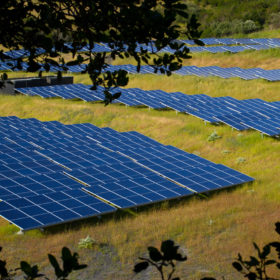
Poland to tender 3.2 GW of solar by end of next year
The government expects to contract 1.5 GW of solar in this year’s two renewables auctions and is estimating a further 1.7 GW in two rounds planned next year.
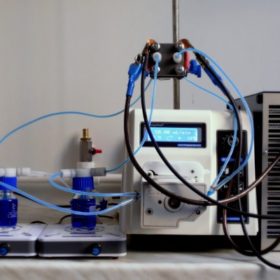
Russian design for vanadium redox flow batteries
Researchers claim to have developed a cheaper, faster method of assembling the field flow plate layers of the membrane electrode assembly used in vanadium redox flow batteries, which they claim outperforms traditional components.

Russia’s first floating PV plant comes online
The facility was built with 140 heterojunction solar panels mounted on pontoon-type floats. The project is located at the site of the 320 MW Nizhne-Bureyskaya hydropower plant, owned and operated by Rushydro in the Russian Far East’s Amur region.
