
Giant solar project under development in Romania
A group of international investors is planning to build a 700 MW solar plant in Arad, in western Romania.
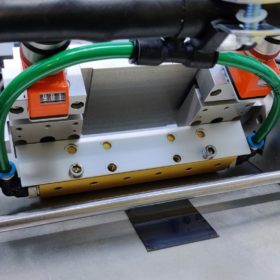
Mini perovskite solar module with 18% efficiency from CEA-INES
The mini panel has a surface of 10 cm². It was built with a manufacturing technique that is claimed to be compatible with the integration of perovskite into heterojunction silicon solar cells in tandem architecture.
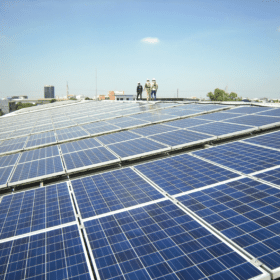
Belgium becomes a GW solar market
The central European country had its best year in terms of new PV deployment in 2020 with around 1,010 MW of installed capacity. Its cumulative solar capacity surpassed 6 GW at the end of December.

‘There is no magic to get to €1.5/kg for green hydrogen in 2022’
Solar pioneer Thierry Lepercq spoke with pv magazine about recent plans of the HyDeal consortium to deploy 95 GW of solar and 67 GW of hydrogen capacity in southern Europe by 2030. Record low green hydrogen prices are easily achievable as solar PV has already reached the required cost level and effects of scale in procurement and manufacturing of electrolyzer capacities will help reduce production costs, he says. Lepercq is also convinced that the consortium will begin selling solar-powered hydrogen at €1.5/kg when the initial supply to industrial customers begins in September 2022.
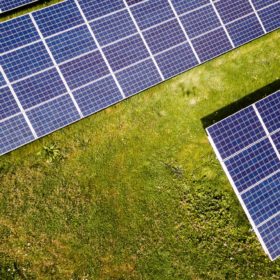
Photon Energy update after ‘difficult’ quarter
The Amsterdam-based, Australia and central Europe-facing developer saw sales slump thanks to Covid-19 last year but has touted a growing operational project portfolio.
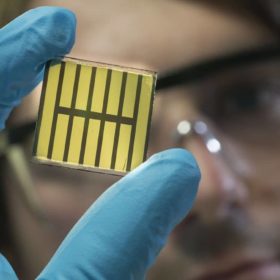
New process to assess quality of perovskite semiconductors
According to German scientists, the quality of the photoluminescence quantum yield of the perovskite layers can be reliably and precisely determined for the first time. It shows that the promising material has more potential for optimization than previously assumed.
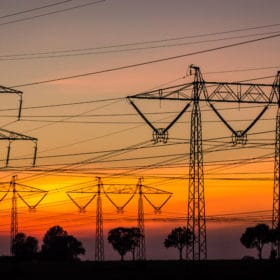
Poland granted preliminary grid-connection permits to 4.4 GW of PV last year
Data from the Instytut Energetyki Odnawialnej shows that the increasing number of grid-connection approvals may result in another record year for PV in the country in 2021.
New Italian PV industry body struggles to unleash utility scale PV
As the ongoing changes in Italian politics inevitably create some uncertainties, PV operators continue to organize themselves, pulling together to put forward their agenda. pv magazine spoke with Andrea Cristini, spokesperson of new industry body Alleanza per il fotovoltaico in Italia, a group of 25 operators which in December joined forces to promote utility scale solar parks.
More EU cash for green hydrogen
The sustainable gas is among ten areas of research and innovation which would benefit from backing by the bloc, member states and industry, if a new European Commission proposal is adopted.
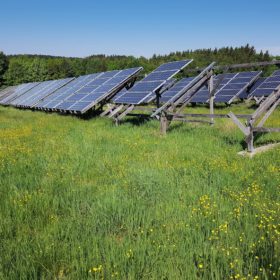
Agrivoltaics have an average LCOE of €0.093 per kWh in Germany
According to new guidelines by Germany’s Fraunhofer ISE, agrivoltaic projects are already competitive with other renewable energy sources today. The lack of a proper regulatory framework, however, is currently preventing the dual use of arable land for food production and power generation from becoming a mainstream solution.
