
Botswana tops list of world’s ‘super abundant’ renewables nations
A Carbon Tracker report estimates 60% of the world’s technical solar potential – enough to produce 3.5 exawatt-hours of clean electricity per year – would already be cheaper than fossil fuel if installed. Of the remainder, most would be in sub-Saharan Africa, a region which has the potential to be a global solar and wind powerhouse.
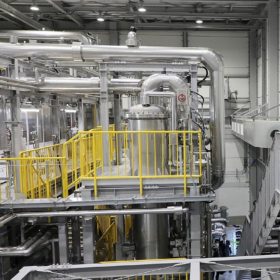
Breaking the rules to foster green hydrogen innovation
The Danish Energy Agency has granted permission, to two power-to-X specialists, for the development of innovative projects without having to comply with the country’s energy legislation. This exemption is part of an upcoming pilot scheme to support new clean energy technologies, including green hydrogen.
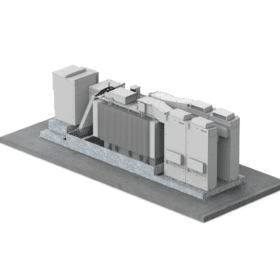
Ingeteam unveils power station for string inverters
The Ingecon Sun String Station reaches 6.4 MW of medium voltage output and is supplied as a “turnkey” solution. It was already installed in solar plants located in Toledo and Huesca.
Legal challenge to Ukraine’s retroactive FIT cuts
Lithuanian-owned solar developer Modus Energy International is reportedly seeking €11.5 million from the Ukrainian government after it retroactively reduced feed-in tariff payments from August. Modus claims Kiev breached the Energy Charter Treaty with its reduced-payment legislation.
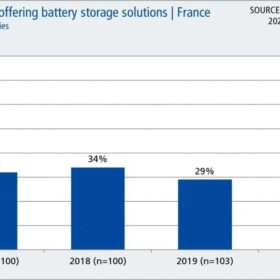
French solar installers ramp up storage offerings
The “Global PV Installer Monitor 2020/2021” reports shows that nearly two-thirds of French PV installers now integrate storage solutions into their product portfolios. EUPD Research said this is a clear sign that rising electricity prices and demand for electric vehicles are creating new business models.
EU approves Danish contracts-for-difference incentive program
The €400 million, three-year scheme will guarantee price stability for developers while limiting costs to the Danish treasury and applies to on and offshore wind, wave power and hydro, as well as solar.
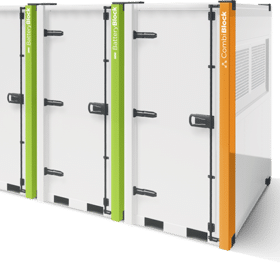
Leclanché unveils modular, plug-and-play solution for utility scale storage
The proposed solution is claimed to be able to mitigate potential fire risk, improve logistics and reduce costs. It consists of a series of interchangeable wide blocks that are said to be easily movable for simplified transportation.
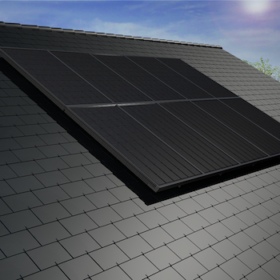
Systovi, Voltec Solar move forward with plans to expand panel capacity
French panel manufacturers Systovi and Voltec Solar are making their first investments in their respective factories. They plan to reach a combined annual production capacity of 1 GW.
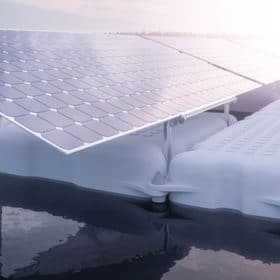
Big solar for Western Balkans disused coal mine
Land scarcity and renewables prices have been long considered significant hurdles for renewable developments in the hilly Balkans. Still, the European Bank for Reconstruction and Development (EBRD) sees solid opportunities in floating PV on public dams, PV modules on rooftops, and renewables projects in landfills and disused coal mines.
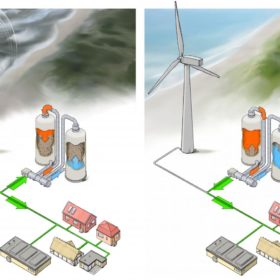
Storing large scale renewables with basalt stones
A Danish consortium is seeking to store electricity from large scale renewable energy plants in the form of thermal energy in big tanks containing crushed, pea-sized stones made of basalt. The first 10 MWh demonstrator is planned to be developed in Denmark and to be powered by a wind facility. Another project is also under development in the United States and is planned to be linked to a solar plant.
