Greece to tender 194 MW of PV capacity
With the government needing to hit 300 MW of capacity before year end, December’s procurement exercise will go ahead despite anticipated complaints over its procedures.
Swedish PV market set for more growth
Although provisional statistics indicated the country had 230 MW of PV capacity at the end of last year, a new report reveals solar growth in 2017 was larger than expected – at 117.6 MW – and that cumulative installed capacity surpassed 300 MW.
Another solar PPA announced in Spain
Energy company Iberdrola will supply power to telecoms business Euskatel. The electricity will be generated by the 391 MW Núñez de Balboa solar plant the company is building in southern Spain, for which Iberdrola secured a first PPA last summer.
Central Asian PV markets create a buzz
Indian solar EPC Sterling and Wilson says it wants to construct 200 MW of PV in Kazakhstan in the next two years, and is eager to get a slice of the Uzbek market too.
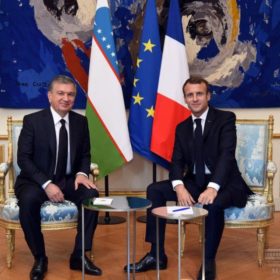
Uzbekistan’s steeplechase towards renewable energy
French oil group Total has reached agreement with national utility Uzbekenergo to build a large-scale PV plant in Samarkand province. However, construction on a 100 MW project by China’s Syngyes has been suspended.
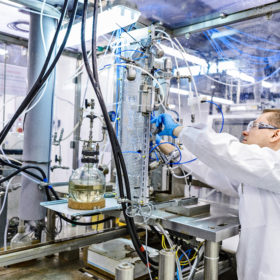
Innolith launches non-flammable battery with 50,000 charging cycles
Inorganic electrolytes will do the trick the company says. For multi-MW grid-scale applications the company says its technology can boost battery life to 50,000 cycles and is non-flammable. It adds that the costs of the product are competitive with conventional battery systems. Innolith is taking over the baton from Alevo, including chief executive and engineers. Alevo, however, went bankrupt last year, making the same promises.
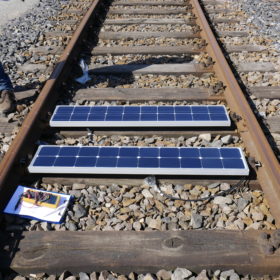
Bankset Energy announces GW-scale plans for solar railways the world over
Bankset Energy Corporation has ambitious plans to install gigawatts of solar PV on railway sleepers across the globe. While the first installation took place in Switzerland, work is under way on projects in Germany, the United Kingdom, France, the United States, China and Italy; and gearing up in Austria and Spain. pv magazine speaks to Bankset Group president, Patrick Buri.
EDF now aims to become e-mobility leader
EDF has launched yet another ambitious plan, this time aiming to become the leader in e-mobility by 2022. It has outlined three targets, and cemented new partnerships, to achieve this goal.
Spain may introduce additional measures to support self-consumption
A few days after the Spanish government introduced new rules for self-consumption and canceled the solar tax, the Spanish Parliament is now reviewing new provisions to reduce the time frame of the registration for a project under the self-consumption regime, while also simplifying bureaucratic procedures.
Encavis buys 80% stake in 300 MW solar project in southern Spain
The Talayuela plant will be built by British developer Solarcentury in the region of Extremadura and will sell electricity under a PPA contract.
