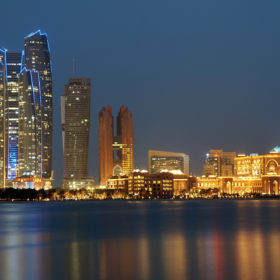
Abu Dhabi’s Masdar vies for stake in Indian developer Hero Future
State-owned Masdar Clean Energy is in talks to acquire a 30-35% stake in Hero Future Energies. With the stake sale, the renewable energy arm of Hero Group expects to raise $300-350 million for its expansion into global markets, according to reports.

PV Market Alliance expects 120 GW of new solar capacity in 2019
The global market stagnated last year, with around 98 GW deployed. For 2019, the experts expect stronger solar growth, provided there are no setbacks in China.

Electric car sales in India declined by 40% in 2018
EV sales retreated to a mere 1,200 units in the 2018 financial year, but electric two-wheeler sales rose 138%, to 54,800 units, according to research and consultancy group Wood Mackenzie.

Rejection of Azure Power bid confirms failure of India’s 10 GW ‘mega-tender’
Delhi-based developer Azure had bid for a 2 GW project on a single site – plus 600 MW of manufacturing capacity – as part of a much-hyped national 10 GW manufacturing-linked tender. The government has decided to reject the bid because it says the quoted price is unreasonable.

India mulls anti-dumping duty on Malaysian solar glass
The government may impose anti-dumping duty of $114.58 per tonne on tempered solar glass imports to provide a level playing field to domestic manufacturers.
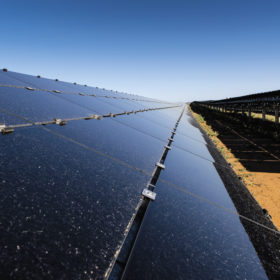
Solar will rebound this year with more than 100 GW of new capacity
Wood Mackenzie’s number-crunchers are the latest analysts queueing up to predict a bumper year ahead for PV, with falling prices, rising efficiency rates and booming markets outside China all on the cards. And it could be a make-or-break year for mega-projects, says Wood Mac.

Indian Railways plans to tender 4 GW solar project
The procurement will be worth an estimated $2.25 billion, and will stipulate the use of 1.2 GW of Indian-made equipment. The power generated will replace 4 GW of coal-fired electricity consumption used by the railways.
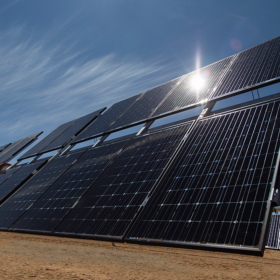
TrendForce forecasts 111 GW of new solar this year
The Taiwanese market research company said the effects of the 5/31 policy shift in China were less severe than expected, and in 2018 the global solar market grew 4.9%, with approximately 103 GW of new additions. This year, the solar demand is forecast to rise another 7.7%.

Investment funds scramble to acquire Indian giant’s 1 GW assets
Global Infra Partners, KKR, Brookfield, I Squared Capital and Macquarie are reported to be among those eyeing the renewable energy assets of debt riddled Infrastructure Leasing and Financial Services.
Planned 5 GW Indian solar plant will be ‘the world’s largest’
Known as the “roof of the world,” the scenic Ladakh region of the Indian state of Jammu and Kashmir could soon host the world’s largest single-location PV plant.
