
Tokyo introduces mandatory PV requirements for new buildings, homes
The Tokyo Metropolitan Assembly has approved new provisions to make solar installations mandatory for new homes. The rules apply to homes with total rooftop areas of more than 20 square meters, and to buildings with rooftops smaller than 2,000 square meters.
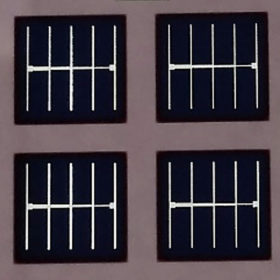
Heterojunction germanium solar cell with 8.6% efficiency
Japanese scientists have developed a heterojunction germanium solar cell with the biggest area ever achieved for the tech. It has an open-circuit voltage of 291 mV, a short-circuit current of 45.0 mA/cm2, and a fill factor of 0.656.
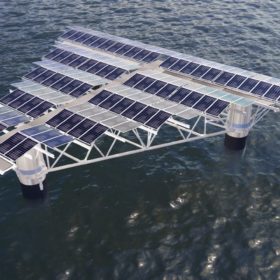
Japan’s first offshore floating solar demonstrator
Tokyu Land and Dutch offshore PV specialist SolarDuck are set to develop a floating solar project in the Tokyo Bay area.

Goldman Sachs backs solar PPA in Japan with $63 million bond
A unit of Japan’s Itochu will sell power from 700 solar facilities to a subsidiary of telecoms giant NTT under a 30-year power purchase agreement. Goldman Sachs is supporting the deal with a first-of-its-kind green bond.

Japan on track to hit 90 GW of PV capacity by end 2023
The Japanese solar market reached a cumulative installed PV capacity of 78.4 GW at the end of 2021, according to a new report from IEA-PVPS. Japanese analyst Izumi Kaizuka told pv magazine that the country could annually install up 6 GW of new solar in both 2022 and 2023.

Tokyo preparing mandatory PV requirements for new buildings, homes
The Tokyo municipal authorities are working on new regulations to make solar installations mandatory for new homes with total rooftop areas of more than 20 square meters, and for buildings with rooftops smaller than 2,000 square meters.

Panasonic unveils vehicle-to-home system for PV-powered homes
Panasonic claims that its new vehicle-to-home system can increase the self-consumption rate of residential solar and storage capacity to 90%.

Heat pumps competitive with gas boilers in some markets, says IEA
Th International Energy Agency (IEA) says unsubsidized heat pumps are already competitive with gas boilers in mature markets like the United States, Canada, Japan, Italy, and China. It says global sales will soar to record levels by 2030.
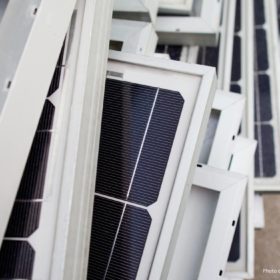
Itochu to start recycling solar modules
Japan’s Itochu has announced a new tie-up with France’s Rosi Solar, which develops tech to recover and recycle high-purity silver, copper and silicon from solar modules.

Mitsubishi unveils air source heat pump
Mitsubishi has released a cascaded air source heat pump that can produce between 7.8 kW and 640 kW of heat. It is reportedly able to generate hot water at a temperature of up to 70 C without boost heaters.
