
Oman tenders another 1.1 GW of PV
Through a new procuremente exercise, the Oman Power and Water Procurement company (OPWP) is now seeking developers for the Manah Solar I IPP and Manah Solar II IPP projects with a capacity of 500 MW and 600 MW, respectively. Both plants will be located at Manah which is around 150 km southwest of Muscat.
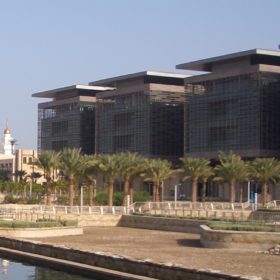
Scientists set new efficiency record for single crystal perovskite
Scientists at Saudi Arabia’s King Abdullah University of Science Technology have set a new efficiency record of 21.09% for a single crystal perovskite. The researchers say this highlights a place for the technology to develop alongside the multicrystalline versions which are progressing toward commercialization.

Jordan’s plan to have solar on all mosques moves forward
Another 35 places of worship will be geared with rooftop PV. Part of the funding for the projects is being provided by the Jordan Renewable Energy and Energy Efficiency Fund. So far around 500 mosques have been equipped through the program,
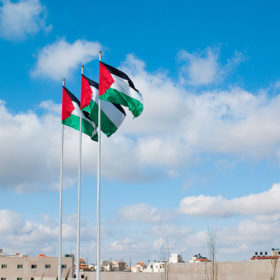
EIB helps Palestine install 35 MW of rooftop solar with $18 million loan
The funds will be used to finance solar arrays on 500 schools across the West Bank and East Jerusalem.

Saudi Arabia readies initial 1.4 GW tender
The kingdom has revealed 28 Saudi entities are among the 60 bidders when the first four projects of the second round of its National Renewable Energy Program are offered up in just over a week’s time.
Clean water and electricity from one system
Scientists at Saudi Arabia’s King Abdullah University of Science and Technology have demonstrated a system based on commercially available solar panels which can generate electricity and produce clean, drinkable water from seawater or otherwise contaminated sources.
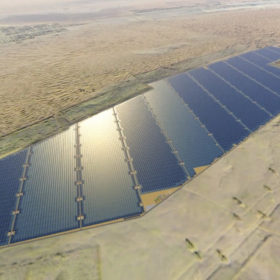
IHS Markit: Global EPC market grew 34% last year
China’s slowdown in installations last year was more than made up for by expansion elsewhere, according to IHS Markit. The news comes amid increasing market fragmentation – with the biggest engineering, procurement and construction business boasting less than 3% market share – and internationalization, with almost half of the top 15 companies operating across more than one region.

The weekend read: Shedding light on PV in MENA
ACWA Power has an installed capacity of more than 1 GW of PV projects across MENA, Southern Africa, and Southeast Asia, and was awarded the landmark Sakaka Project – Saudi Arabia’s first utility scale PV project – which it began to construct in November 2018. pv magazine caught up with Paddy Padmanathan, CEO of the Saudi-based energy giant to discuss the Middle East’s growing solar markets.
EWEC opens 2 GW Al Dhafra tender in Abu Dhabi
The huge site would have to be operational in the opening quarter of 2022 and follows the recent completion of the gigawatt-scale Noor Abu Dhabi site. The successful developer would secure a 40% slice of the Al Dhafra project, under Abu Dhabi rules.

Ideematec banks new investment worth millions for business expansion
The solar tracker supplier is benefiting from a steadily growing PV market and has inked a deal with ABN AMRO Energy Transition Funds for new capital to expand its operations.
