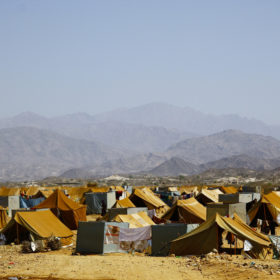
Yemen sees solar energy grow despite civil war
The disrupture of the country’s power system, which is being caused by the ongoing civil conflicts, is pushing Yemenis to resort to solar as a primary source of energy. According to preliminary estimates, more than 300 MW of PV power generators were installed in Yemen since the war began in 2015.
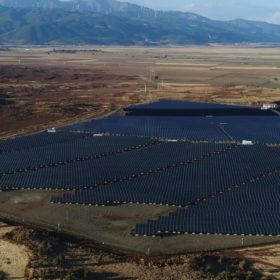
Turkey added 1.17 GW of solar in December alone
According to new figures from the local grid operator, Turkey’s cumulative installed PV capacity has reached 3.42 GW, as of the end of 2017. The end-of-year rush was due to the 25% FIT reduction granted to unlicensed projects, which came into effect on January 1.
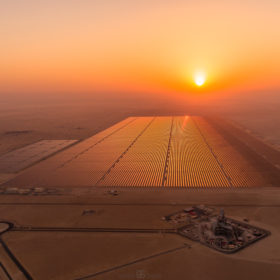
MESIA’s Middle East Solar Awards honor solar champions in the Middle East
One of the highlights of this year’s Abu Dhabi Sustainability Week (ADSW) and the World Future Energy Summit (WFES), which forms part of ADSW, was Wednesday evening’s Middle East Solar Awards Ceremony, organized by MESIA, the Middle East Solar Industry Association.

Turkey to introduce net metering scheme for residential PV
The new rules are expected to come into force in the first half of this year. PV systems ranging in size from 3 kW to 10 kW will be entitled to have access to the scheme.
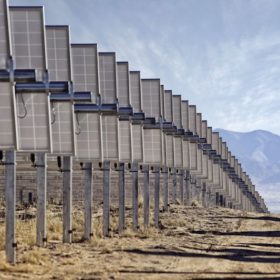
TÜV Rheinland: Centralized tracker architecture can reduce LCOE
A report published by TÜV Rheinland, which was commissioned by tracker manufacturer, Array Technologies, shows that centralized tracker systems such as those offered by Array Technologies offer an LCOE advantage over other, decentralized system architectures.

PIF, Palestinian Government invest $35 million in PV rooftop projects
The Palestinian Investment Fund (PIF) and the Ministry of Education have signed an agreement to install 35 MW of solar PV on the roofs of 500 public schools.

WFES: Acwa Power partners with Huawei on solar plant monitoring
The Saudi Arabian power firm announces details of pilot project that will utilize Huawei’s FusionSolar control and monitoring system to enhance a fleet of PV plants.

Jordan Water Authority launches tender process for two PV projects totaling 30 MW
The authority has issued two invitations for the prequalification of two solar projects, with a capacity of 6 MW and 24 MW, respectively, that are planned to be built at two water stations.

Saudi Arabia to tender seven PV projects totaling 3.3 GW in 2018
The launch of the series of tenders was confirmed to pv magazine by Turki Mohammed Al Shehri, the head of the Saudi Renewable Energy Project Development Office.
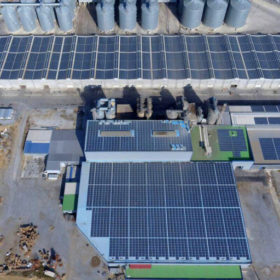
Germany’s IBC, SolarWorld announce separate solar developments in Turkey
While the German EPC contractor has installed a 4.2 MW rooftop solar PV plant, the manufacturer has agreed to supply 60 MW of modules to the Turkish market.
