Shaping the future of PV manufacturing
Recent years have seen silicon wafers, solar cells and PV modules introduced to the market in a range of different sizes, as manufacturers seek cost optimization all along the supply chain. And though this move away from standardized dimensions has caused a few disruptions, the industry is generally keen to realize potential for cost reductions where it exists and has been quick to embrace larger format products. In this pv magazine Webinar, we’ll take a closer look at Trina Solar’s latest innovation, producing rectangular shaped cells that promise to revolutionize the industry by packing more watts into shipping containers and onto rooftops and racking systems, bringing big BOS savings for project owners and developers.

Bahrain launches tender for 72 MW of solar
The Kingdom of Bahrain has kicked off a tender to award a 20-year contract to a local or international company to build, own, operate and maintain a grid-connected solar project with a minimum capacity of 72 MWc in the Sakhir region.
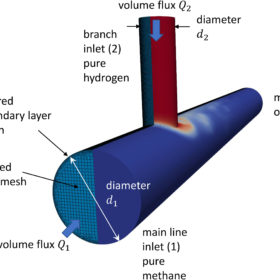
The Hydrogen Stream: Traditional hydrogen blending could damage gas pipelines, say researchers
UK researchers have revealed that gaseous hydrogen could cause problems in natural gas pipelines, while electrolyzer manufacturer Nel has announced plans to build a second production line in Norway.
What ultra-powerful string inverters mean for utility-scale and EPCs
String inverters continue to grow in capacity to support the growing size and output of high-power and high-current PV modules becoming more normal at utility-scale. And that’s changing the equation for LCOE, at a critical growth point in the solar industry. In this pv magazine Webinar, we’ll hear from Sungrow about its new maximum-power three-phase 352kVA utility string inverter, the SG350HX, and discuss availability, certifications, and how LCOE is affected.
Demonstrating durability in n-type modules
The promises of a longer lifetime and better performance under harsh conditions, such as desert heat, are among the key reasons the PV industry is beginning to make the switch to n-type technologies. While the cell technologies themselves are a major factor, there’s a whole lot more to think about when it comes to ensuring long-term reliability for modules in the field. In this pv magazine Webinar, we examine the joint roles of advanced cell technology and proven bill of materials in ensuring reliability as expected lifetimes for PV modules move to 30 years and beyond.

The Hydrogen Stream: Hyundai to export heavy-duty hydrogen trucks to Germany
Seven German companies have agreed to put 27 Hyundai heavy-duty fuel cell trucks into fleet service in the coming months. American Airlines has revealed an investment in ZeroAvia, while New Fortress Energy has invested in a 120 MW industrial-scale plant in Texas.

Turkey simplify rules for self-consumption, solar irrigation
Turkey’s new provisions state that self-consumption projects and solar irrigation installations can be built without the need for construction permits.

Rechargeable silicon redox battery for renewable energy storage
Israeli researchers have developed a device that combines a reversible Si anode with halide cathodes and uses hybrid electrolytes to enable cell recharging. In the proposed system configuration, silicon is dissolved during the battery discharge process, and upon charging, elemental silicon is deposited.

Saudi crown prince bears green energy gifts to Greece, but little action seen
Saudi Arabia’s crown prince traveled to the Greek capital of Athens this week, representing his first official trip to Europe since the 2018 killing of Saudi journalist Jamal Khashoggi. His visit was marked by the signing of several agreements between the two countries and some big statements issued by the Saudi leader regarding green energies and hydrogen.
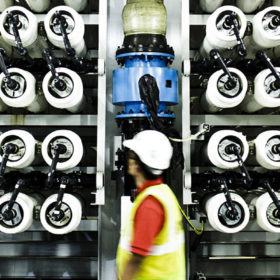
Large scale solar to power desalination unit in Oman
TotalEnergies and Veolia will construct a 17 MW solar facility at Veolia’s Sharqiyah Desalination plant in Oman. The PV plant will have an estimated annual production of 30,000 MWh and will be able to cover more than a third of the desalination plant’s daily consumption.
