
Oman partners with bp on multi-gigawatt renewables, green hydrogen development
The British energy giant will support the potential development of multiple gigawatts of wind, solar and green hydrogen projects in the Middle Eastern country by 2030.
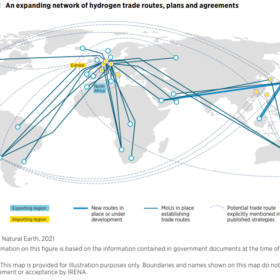
Green hydrogen could disrupt global trade, bilateral energy relations
While there are still many uncertainties as to the way in which hydrogen trade might evolve and change economic ties and political dynamics between countries, experts agree that green hydrogen can bring winds of change to the global energy arena. According to the International Renewable Energy Agency, significant geoeconomic and geopolitical shifts are just around the corner.
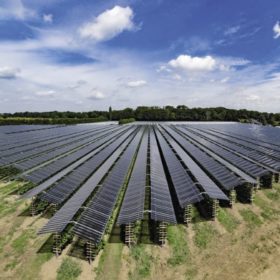
Israel launches tender for 100 MW of agrivoltaics
Selected projects will be awarded a fixed tariff of ILS 0.2091 ($0.06.708)/kWh over a 23-year period.

PV-powered heat pump system for commercial swimming pool heating
Researchers in Jordan have designed a solar-assisted heat pump system for swimming pool heating at a hotel in the coastal city of Aqaba. They found that the system has a payback time of only 1.94 years and that total profits after ten years of operations may reach around $1.88 million.
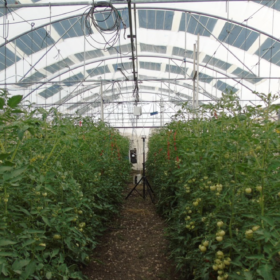
Solar for polytunnel greenhouses
Israeli researchers have tested organic PV modules to power polytunnel greenhouses and have found that they might offer advantages over conventional crystalline silicon, despite their lower efficiency rates. They have lower operating temperatures but are subject to degradation, due to the mechanical stress caused by the wind-induced movement of tunnel sheeting.
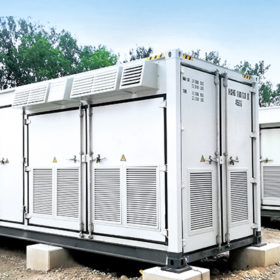
Massive deal in Israel’s growing energy storage market
China-based Sungrow has agreed to supply Israeli developer Enlight with 430MWh of its storage systems. The batteries will be used in two projects secured by Enlight in tenders held by the Israel Public Utility Authority for Electricity.
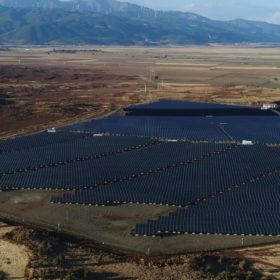
EBRD package to pay for 27 MW of solar in Turkish city
The London-based development institution will offer up a loan and grant to fund the construction of five solar plants at municipal sites across Gaziantep, as part of the lender’s Green City program.
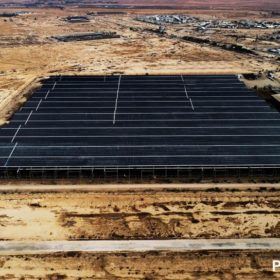
Israel allocates 1.14 GW of PV across two tenders, lowest price comes in at $0.02751/kWh
The Israeli authorities allocated more than 1.14 GW of PV capacity and 210 MWh of storage across two different tenders. In a first procurement exercise for the 330 MW/210 MWh Dimona solar-plus-storage project the winner was Israeli company Shikun & Binui Holdings Ltd. In another tender for innovative PV projects local developer Prime Energy secured 475 MW with the final average price of $0.0541/kWh.
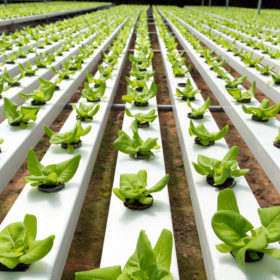
Solar for hydroponics
An international research team has examined combining solar power generation with energy-intensive hydroponic horticulture and has found that this may be a viable solution depending on project size and available incentive policies. Their approach considered various factors impacting PV system efficiency, including environmental factors, the type of solar array, and the electricity demand from the hydroponic farm.
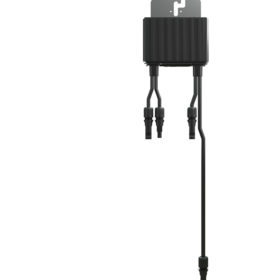
SolarEdge launches new power optimizers for residential PV
The optimizers are available in two versions that can be used with modules of up to 440 W and 500W. The devices have an efficiency of 99.5% and come with a 25-year guarantee.
